Feeds:
Posts
Comments

Second gathering of Malay leaders

KOTA BHARU 7 September 2009 – Top Malay political leaders went ahead with the second Majlis Berbuka Puasa between Umno and PAS members in Stadium Sultan Muhd IV despite attempts by certain quarters condemning the event as racist and against the 1Malaysia concept.

After weeks of preparation and labourous gathering of feedbacks, the first Majlis Berbuka Puasa was held in Putra World Trade Centre on 27th August, about a week after Ramadhan started.

About 3,000 members of both parties attended the historic first event. The mood was jovial yet expectant as that was the first time since 1973 where Umno and PAS leaders were able to sit comfortably with each other without any discussion on party agendas. Although the event was initially meant for divisional leaders from both sides, it was later opened up to cater for branch leaders as well.

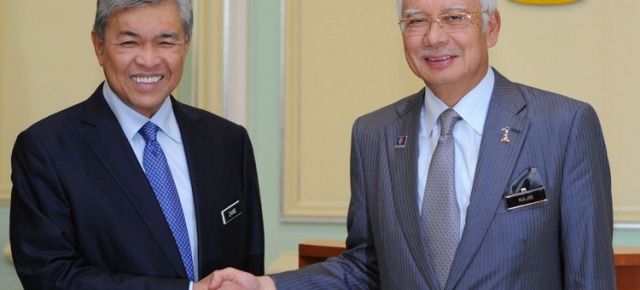
By the end of the Tarawih prayers, Dato’ Sri Najib Tun Razak and Datuk Seri Haji Abdul Hadi Awang promised to sit down  to discuss issues of mutual understanding.

Hence, last night’s gathering in the Stadium of Sultan Muhd IV was PAS’ reciprocation of the first meeting. This time however, the crowd was bigger. About 30,000 members from both parties nationwide attended the Majlis Berbuka Puasa which was then followed by Isya’ and Tarawih prayers.

A surprise visitor came at the last minute. Mursyidul Am PAS, Dato’ Haji Nik Aziz Nik Mat arrived at 7.10 pm amidst the cheering of the crowd. He was seen as reluctant to the idea last week when he dismissed the invitation to the PWTC event.

This time however, the Kelantan Menteri Besar was all smiles and the mood of the night was more pleasant and relaxed than a week ago.

In a press conference at the end of the night, the Prime Minister and the PAS President briefed the reporters about their joint statement issued earlier in the day about BN and PAS’ support over the issue of making Bahasa Malaysia a compulsory credit to get full SPM certificate and also making English a compulsory pass subject in SPM.

Najib said that although Umno and PAS were politically at odds with each other, there was no reason to disagree on everything.

“PAS and Umno have different outlook when it comes to politics. But since we are of the same people and same religion, we need to find some focal point to agree on something. This I think is a good start as arguing over everything will not be good for the country,” he said.

Hadi Awang in lauding the decision, said if the move will improve the Malays and the future generation, PAS will strongly advocate it.

“PAS will continue to support the move as it is not against the Islamic teachings where strengthening the whole ummah is paramount in any Muslim society. However, the government must ensure that those who lagged behind must be given extra guidance and help so that they too can perform as equals,” he said.

Both also agreed to discuss on more issues that are important in the near future.

With Aidilfitri just two weeks away and the spirit of forgiveness and humility abound, the reality of seeing these biggest political parties in Malaysia getting along in several important national issues will probably be the impetus of a more strong and united Malaysians. – New Straits Times.

The above article is of course, a fictitious news story. But this is what most peace loving Malaysians want to see regarding the PAS and Umno Malay unity issue.

The idea of PAS and Umno berbuka puasa was mentioned by SatD of Pure Shiite in our online discussions a couple of weeks ago. I am only guilty of embellishing it further.

But what progress will Malaysia make should that really happened!

Anyway, as I read the latest news about the Regent of Perlis calling bumiputeras to rebuild the commerce civilisation of the old Melaka Sultanate, I became nostalgic about an article I wrote back in November 2008 entitled “Di sini Bumi Kupijak, Di sini Langit Ku Junjung”.

With much due respect to the Regent, I would like to add that before we can build a national civilisation of any kind, a strong foundation between the races in Malaysia must be prepared before anyone can embark on this journey.

With so many DOMESTIC obstacles being created and hurled by racists, bigots and chauvinists to each other, I wonder whether the Bangsa Malaysia concept will exist by 2020…

Hence, the idea to republish the article below is apt amidst the growing domestic challenges in recent times.

______________________________________________________________________________

On 14th November 2008, I wrote:

Saya merasa terpanggil untuk mengetengahkan satu isu yang amat mendukacitakan saya. Apatah lagi apabila para pembaca sememangnya sudah tahu mengenai pendirian saya mengenai perkara ini.

Tidak lain tidak bukan, ia adalah isu perlekehan kaum lain terhadap kaum Melayu.

Semenjak kemenangan besar parti chauvinist cina di peringkat persekutuan, bertubi tubi para pemimpin dan ahli ahli parti tersebut memperkecilkan kaum melayu, raja raja melayu dan juga agama dan adat budaya kaum melayu. Yang terakhir, mereka merendah rendahkan martabat bahasa kebangsaan sendiri iaitu bahasa Melayu.

Apabila mereka melemparkan tuduhan bahawa para pemimpin Melayulah yang bersifat rasis dan ultra Melayu, mereka tidak sedar yang merekalah sebenarnya dalang kepada semaraknya isu perkauman di Malaysia.

Saya lihat, para chauvinist ini suka benar mengeluarkan kenyataan mengenai perkauman. Tidak ada perkara lain yang terhambur dari mulut mereka.

Tidak putus putus isu isu kaum dibangkitkan. Dan yang terbaru, isu kemenangan Barack Obama di Amerika Syarikat juga dikaitkan dengan isu perkauman di Malaysia. Mengapa ini terjadi? Mengapa warna kulit dijadikan bahan politik mereka semua ini? Jika kita sendiri tidak mahu dianggap rasis, maka warna kulit President Amerika Syarikat tidak patut dijadikan bahan untuk menegangkan suasana.

Rejal Arbee menulis di dalam The Sun;

I find Tan Sri Ramon Navaratnam’s description of Barack Obama’s election as the 44th President of the United States (”Obama an important lesson in national unity”, Nov 7) as being remarkable for an African-American and that it could be a lesson for Malaysia as intriguing.

Yes, it could be a lesson for us only if the various races are willing to replicate what the latter day immigrants and the minority groups in America are willing to do, ie become Americans adhering to the American way adopting its customs, language and way of life. What it means is that the latter day immigrants are willing to forgo their own dispositions to assimilate into the American way of life.

This American way is based on the Anglo-Saxon customs and norms that were brought by the original immigrants, the Pilgrim Fathers as well as the continental Europeans with their Anglo-Saxon way of life.

Malaysia is obviously very different from America. Its formation is based on an understanding of give and take where the minority immigrants were given citizenship status by the majority group under the Jus Soli principle just before we gained our independence.

In exchange the minority groups recognise the special rights of the original inhabitants of the country just as their rights are also recognised.

Thus each of the minority nationalities like the Chinese and the Indians continue with their own practices and customs and there was as such no melting pot as in America. – full content of the letter can be read here.

Selang tidak sampai beberapa minggu setelah Datuk Ong Tee Kiat menang di dalam perebutan jawatan Presiden MCA, beliau dengan lantangnya menyatakan pendapatnya mengenai kemenangan Barack Obama di Amerika Syarikat.

Apabila saya membaca mengenai kenyataan Datuk Ong Tee Kiat (ketika di Jakarta baru-baru ini), naluri saya terpanggil untuk menyimpulkan semua perkara di atas seperti yang tertera di bawah;

Pada prinsipnya, seruan Datuk Ong Tee Keat supaya rakyat Malaysia menghapuskan sikap perkauman adalah dialu-alukan. Seruan beliau diilhamkan oleh perubahan di Amerika Syarikat. Malangnya, beliau memberikan contoh kepada kontroversi perlantikan pemangku Pengurus Besar PKNS.

Sebenarnya contoh ini mempamerkan sikap kecinaan beliau yang tebal.

Kredibiliti dan keikhlasan beliau sebagai pemimpin kaum Cina pasti dikagumi oleh semua rakyat, termasuk orang Melayu jika beliau telah memberikan contoh toleransi dan tolak ansur kaum Melayu kepada kaum Cina dan India dan sekaligus menyeru kaumnya dan kaum India supaya mempercepatkan proses asimilasi dengan masyarakat Melayu.

Kaum Cina di Malaysia sekarang nampaknya lebih Cina daripada orang Cina di Singapura, Indonesia, Thailand dan Filipina. Malah mereka lebih Cina dari orang Cina di China sendiri.

Juga jelas lebih tebal kecinaan mereka berbanding sikap datuk nenek mereka yang datang ke Tanah Melayu dulu.

Sikap ini dan sikap ‘beri sejengkal nak sedepa’, ‘kacang lupakan kulit’ dan ‘menangguk di air keruh’, amat membimbangkan bangsa Melayu.

Jika Datuk Ong dan semua pemimpin yang lain benar benar ikhlas dan jujur ke arah membentuk satu negara, satu bangsa, satu budaya, satu bahasa, satu wawasan, satu halatuju dan sebagainya maka bermulalah dari hari ini mereka bersuara mengenai aspirasi dan kebimbangan kaum lain dan pemimpin yang lain pula menjuarai aspirasi dan kebimbangan kaum selain dari kaum mereka sendiri.

Pada mulanya, saya fikir akan merasa keseorangan di dalam menghuraikan isu tersebut. Apatah lagi apabila saya merasa yang Datuk Ong Tee Keat telah memperli kaum Melayu. Saya tahu, saya akan mendapat pelbagai reaksi dari pihak pihak tertentu.

Akan tetapi, saya mendapat tahu bahawa ramai yang sependapat dengan saya.

Dua hari lepas, Tun Dr Mahathir telah bersuara mengenai kewujudan seorang Perdana Menteri berbangsa Malaysia dan juga isu mengenai Sekolah Wawasan. Bagi beliau, bangsa seseorang Perdana Menteri tidak penting. Yang penting adalah penerimaan seseorang Perdana Menteri oleh majoriti rakyat Malaysia.

Ini merupakan cabaran kepada Lim Kit Siang, Karpal Singh dan mereka yang sewaktu dengannya. Tidak guna menyebarkan api perkauman dengan menempelak keadaan politik dalaman Malaysia. Cermin diri sendiri dahulu sebelum hendak bercita cita meneruskan idea menempatkan seseorang dari mereka sebagai Perdana Menteri.

Jika hendak berbahasa Melayu pun masih terencat, malah suka pula memperlekehkan apa sahaja yang bersangkutan dengan Melayu, saya rasa cita cita mereka ini bagai mimpi disiang hari. Inikan pula cuba hendak berkurang ajar dengan pemimpin dan raja raja Melayu.

Adalah menjadi satu trend bagi pihak pembangkang untuk sentiasa mencerca kerajaan dalam semua aspek. Akan tetapi, ini akan lebih mendatangkan keburukan dari kebaikan. Lebih lebih lagi jika apa yang ditimbulkan hanyalah berkisar dengan isu perkauman.

Datuk Mukhriz membangkitkan hal ini di dalam temuramah beliau dengan Syed Akbar Ali baru baru ini;

“Often they just say things without maturity and without thinking of the consequences. Yes they should keep the ruling party on its toes but not try to score points at every turn. To them everything becomes a super hot, blown out of proportion issue. And they are making it very difficult to work with them.”

Walau bagaimanapun, ahli wakil rakyat dari PKR kini juga telah menyuarakan pandangan beliau yang mirip kepada pandangan peribadi saya dan juga para pemimpin Melayu yang lain.

Nik Nazmi berkata;

A strong sense of national identity as well as appreciation of our diverse roots by all Malaysians – both Malays and non-Malays - are crucial to reducing our racial chauvinism. We need leaders who understand the historic compromise we achieved in forging our Independence, both by understanding the historical narrative of the country as well as the rights of the non-Malay communities. At the end of the day, we need Malays to fight for non-Malays and non-Malays to fight for Malays. That, to me, is better than having a non-Malay PM.

Bangsa Malaysia hanya boleh wujud jika semua pihak mempunyai satu titik persamaan. Apakah titik persamaan itu? Selain dari keadilan (bukan kesamarataan) di dalam pegangan ekonomi negara, Bangsa Malaysia mesti berkebolehan bertutur secara selesa di dalam satu bahasa. Sebab itu, Bahasa Melayu diangkat menjadi bahasa kebangsaan. Status Bahasa Melayu sebagai bahasa kebangsaan bermaksud, ia adalah lebih tinggi dari bahasa bahasa lain.

Ini adalah realiti yang mesti diterima oleh semua rakyat Malaysia.

____________________________________________________________________

(to be continued)

A few commentators privately commented in this blog asking whether I am supporting the Unity Government suggested by PAS President, Haji Hadi Awang. Some feel that certain parts within my previous article which had lamented on the inability of the Malays of different political idealogies to sit down together and unite under a mutual cause was my agreement towards a Unity Government.

Well, the answer is, I am against Unity Government of PAS and Umno. However, a caveat – I would be more supportive if PAS can discuss with Umno is several platforms involving Malay issues i.e., working together to strengthen any areas the Malays are lagging behind.

Let’s discuss the first scenario specifically why I am against the Unity Government of PAS and Umno. Firstly, it is more important for BN especially for Umno for PAS to remain in the opposition coalition.

Apart from the fact that Barisan Nasional is already the best formula for the ruling government of Malaysia, PAS as an opposition will be the insurance for the Malays in general. Imagine if the opposition comprises only of non Malay majority parties while the government consist of Malay dominated parties. What should happen if the government loses support and lost in a general election? The opposition will then form the government without any Malay representatives in it.

Surely that will be disastrous for the majority of Malaysians. That is why, one of the outcome in the ousting of PAS from BN in 1978 was the creation of Malay voice in every opposition coalition established just before each general election.

Inadvertently, it became a good strategy for the two biggest Malay parties in Malaysia at that time. All know that PAS, with its idealogy, is poles apart with the DAP. Thus, any fundamentally strong opposition will face great difficulties to exist.

For example, Pemuda PAS had urged to government to continue with the NEP in their party general assembly recently. Thus, as an insurance, PAS should be in the loose coalition of opposition parties.

Secondly, I find it sickening to see old men such as the ulamas in PAS and experienced politicians like those in Umno cannot even show some form of amiable attitude towards each other.

How can this be? PAS ulamas can be friendly with other people but with Umno leaders, they became arrogant and conceited. Although Umno leaders had shown open mindedness in dealing with the flip flopping of PAS leaders, the ulamas treated this open mindedness with disdain.

This is what I meant in the paragraph of the previous article – the reluctance to see eye to eye resulted in the inability to achieve anything greater or better. I wrote:

Perpecahan yang melanda bangsa teramai di Malaysia inilah yang menyebabkan tiada tapak untuk menganjakkan cara pemikiran mereka ke tahap yang lebih baik. Tiada tapak untuk memulakan anjakan bermaksud, segala usaha yang dilakukan untuk memperkasakan bangsa telah digagalkan oleh sifat hasad dengki, tamak, gila kuasa, fitnah-memfitnah, kafir-mengkafir dan lain lain lagi…

Because Malays indulged themselves into too much politicking which often than not, constricted their ability to be farsighted. Their lust for power and constant bickering over the smallest of issues led them to be divided. And once you are divided, any effort to work for betterment will not be successful…

Any effort to strengthen the Malays say, to make English a compulsory pass subject will be opposed by the Malays (PAS) themselves just for the sake of opposing!

I am all for the PAS leaders and Umno leaders to discuss any issues to uplift the current mediocre state of the Malays. But I am against any government which consist only PAS and Umno. On that note, all this political one-upmanship of of political debate, unity government and political mud-slinging need to stop or else, nothing will change.

We know that being stagnant in a rapidly changing world is to become regressive.

When Nik Aziz said:

“Hendak sebut apa lagi kerana Umno benar-benar memisahkan agama dan politik. Umno buat kerja tidak serupa dengan kehendak Nabi Muhammad s.a.w.”

Does he realise that if Umno allegedly separates religion and politics, he is more guilty of mixing politics with religion!

His own political expediency is more important than gaining the chance to bring Muslim Malays closer through mutual causes? What kind of ulama is this?

I guess in his books, the Prophet S.A.W did not teach all Muslims to stand united. I am really disappointed with Nik Aziz. Words cannot describe how I feel.

Why can’t the malay politicians from PAS just cut all these timewasting rhetorics and meet with Umno soon? What stopping them?

The DAP?

PAS needs to realise  that all this while,  their election machinery and their members are being used by its political partners to the greatest effect. PAS has nearly a million members as opposed to the DAP who allegedly has about 50,000 members. A million doing the work for 50,000? A million being cajoled into submission by a mere 50,000? PAS has been relegated to become an army of gurkhas without any say in the strategic planning of Pakatan Rakyat.

Yet, arrogantly PAS thinks it talks from a position of strength. With around 25 seats in Parliament, they will lose more in the next general election should they persist in remaining aloof towards any discussion in the Malay progress.

With this, should Pemuda PAS feel anxious and nervous about any efforts that call for the abolishment of Malay special position or the NEP, they should read Utusan Malaysia’s article  entitled Bangkitlah Melayu.

Last time I checked, PAS’ partner, Mr. Lim Kit Siang lambasted that article because he felt that Malays should not make any calls to strengthen themselves. When everyday since a few years ago, the Malays were subjected to ridicule in the blogoshere, where insulting calls to abolish the Monarchy, Article 153, ridiculing Islam, calling Malays as baboons etc. could be read on daily basis, it was not surprising that the blinkered and chauvinistic Lim Kit Siang failed to mirror himself when he labeled that article as racist.

Nevermind that the article actually called on the Malays to halt the political divisiveness and remain united.

In the end, with the Prime Minister giving out more and more policies that favour the non-bumis, the Malay solidarity will become even more important in the challenging times ahead.

And what are PAS and UMNO leaders doing now? Fighting over who is more pious? Arguing over who is more politically relevant? Fighting over who will be in heaven in after life and who will be in hell?

In my eyes, both are prime candidates for eternal damnation should they fail to crawl out of this pathetic political standoff and do something constructive about it.

(to be continued)

PAS dan Dasar Ekonomi Baru

Baru-baru ini kita dikejutkan oleh saranan sayap Pemuda PAS agar Dasar Ekonomi Baru diteruskan oleh kerajaan.  Mereka menentang dasar liberalisasi ekonomi yang diperkenalkan oleh Perdana Menteri sebelum ini. Berpusu-pusu para penyokong bukan Melayu Pakatan Rakyat mengherdik PAS yang pada anggapan mereka ini, telah menyimpang dari dasar anti-Melayu mereka.

Agak menghairankan apabila di dalam muktamar PAS tersebut, salah satu parti yang mempunyai jumlah ahli terbesar di kalangan Pakatan Rakyat menyuarakan sesuatu yang mirip kepada wadah perjuangan Barisan Nasional.

Parti- parti di dalam Pakatan Rakyat mahu tidur sebantal tetapi dalam diam ingin mimpi berlainan. Sejak bila pula PAS mendaulatkan bangsa? Pasti tidak, saranan tersebut telah menunjukkan bahawa walau apa pun yang dilaungkan oleh PAS mengenai dasar perjuangan Islam mereka, ahli-ahli akar umbi PAS terutamanya mereka yang muda, menjiwai betapa pentingnya semangat Kemelayuan tersebut. Ini wajar dan normal kerana PAS mempunyai ahli yang terdiri dari kaum Melayu sahaja (seperti Umno).

PAS wajib ingat bahawa, dasar liberalisasi Kerajaan Barisan Nasional terhadap DEB terbit dari tekanan dari rakan politik mereka sendiri di dalam Pakatan Rakyat lebih-lebih lagi dari DAP. Oleh itu, mengapa perlu rasa resah dan gundah gelana?

Menarik sekali apabila sejurus selepas kemenangan besar parti pembangkang semasa PRU12 yang lepas, Pemuda PAS telah menyokong Lim Guan Eng untuk membuang DEB di Pulau Pinang. Akan tetapi, apabila mabuk kemenangan sudah reda dan pakatan yang dibina mula kelihatan pincang dan terumbang-ambing kerana idealogi yang berbeza, kita mula melihat PAS mula mengetengahkan isu-isu yang berkait rapat dengan jatidiri mereka sendiri.

Orang Melayu dan Dasar Ekonomi Baru

Ya, DEB amat berkait rapat dengan jiwa Melayu. Bahkan, ianya juga berkait  rapat dengan jiwa rakyat Malaysia yang lain. DEB (sebenarnya DEB tidak lagi wujud kerana sudah digantikan dengan Misi Nasional) diperkenalkan untuk menjamin kesejahteraan semua rakyat Malaysia amnya.

Akan tetapi, apabila bangsa bukan Melayu telah dengan bijaknya menggunakan DEB untuk menaikkan taraf kehidupan mereka, kebanyakkan orang Melayu telah menyalahgunakannya untuk kepentingan sendiri hingga mengakibatkan nasib Melayu tidak berubah walaupun sudah dekat 40 tahun dasar ini dijalankan.

Pendapat penulis mengenai DEB sudah diketahui para pembaca. Walaupun penulis menganggap DEB adalah perlu, ianya mesti diberi matlamat dan jangkahayat baru agar bangsa Melayu pada amnya mempunyai sasaran baru untuk dicapai.

Memanjangkan usia DEB tanpa halatuju dan matlamat yang tepat hanya akan mewujudkan bangsa yang lemah. Ya, Melayu dengan DEB akan menjadi lemah kerana taraf ekonomi bangsa bukan Melayu terutamanya bangsa Cina menjadi lebih kuat dengan bantuan DEB. Apabila orang lain menjadi lebih kuat dari segi ekonomi manakala kita pula tidak berganjak dari takuk lama, dengan sendirinya kita akan terkebelakang.

Dengan cara pemikiran yang cetek dan pentingkan diri sendiri, Melayu akan menjadi kaum yang tidak akan maju walaupun DEB ini diteruskan hinggake akhir zaman.

Oleh itu, kerajaan perlu membuat sesuatu yang boleh memberi kumpulan sasaran ini untuk maju kehadapan tanpa melunturkan semangat dayasaing mereka.

Melayu ini, suka meminta-minta. Melayu jangan jadi seperti golongan rasis bukan Melayu dewasa ini yang suka meminta-minta walaupun taraf kehidupan mereka jauh lebih baik dari kaum lain.

Semangat dayasaing perlu diperkasakan untuk kaum Melayu sejak mereka kecil lagi. Ini sahaja yang boleh meningkatkan pemahaman mereka bahawa untuk maju kehadapan, usaha yang lebih amat perlu. Sifat rajin dan bekerja keras adalah sifat yang mulia dan terpuji. Di kalangan penganut Kristian, sifat pemalas, tamak dan hasad dengki adalah antara sifat-sifat yang terlarang. Apa pula agama kaum Melayu di negara ini? Adakah agama kaum Melayu di Malaysia ini tidak menitikberatkan sifat rajin berusaha?

Sejak sebelum lahir lagi hinggalah ke liang lahad, rakyat Malaysia terutamanya kaum bumiputera telah dijaga oleh kerajaan. Sejak di dalam perut ibu, bantuan perubatan yang amat murah disediakan. Kadangkala, mereka diberi rawatan percuma di hospital kerajaan. Walaupun miskin, ibu-ibu boleh melahirkan anak mereka dengan percuma. Syukur Alhamdullah.. jika kita di negara maju lain, mereka perlu ada insurans perubatan untuk mendapat perkhidmatan perubatan. Berapa ramai orang Melayu yang mempunyai insurans hayat di Malaysia ini? Mereka tidak perlu sebarang insurans kerana walaupun memerlukan pembedahan sakit jantung sekalipun, kerajaan akan membayarnya bagi pihak mereka yang tidak berkemampuan.

Apabila meningkat dewasa, pendidikan diberikan percuma di sekolah-sekolah kebangsaan. Yuran  persekolahan tidak perlu dibayar.. buku teks adalah percuma. Anak-anak Melayu cuma perlu hadir ke kelas dan belajar sahaja. Kadangkala, bantuan pakaian persekolahan juga disediakan oleh Jabatan Kebajikan Masyarakat. Jika tidak cukup wang untuk ke universiti, diberi pula bantuan biasiswa. Sejak sedekad yang lepas, PTPTN disediakan untuk SEMUA rakyat Malaysia yang tidak berkemampuan untuk membayar yuran universiti mereka. Amat beruntung mereka ini.

Apabila melepasi alam persekolahan dan memasuki alam pekerjaan, bantuan kerajaan diberikan kepada mereka yang hendak memulakan perniagaan sendiri. Kerajaan mewajibkan kepada syarikat-syarikat bukan bumiputera yang wujud bagai cendawan selepas hujan untuk mengambil kaum bumiputera agar tercapai kuota 30% dari jumlah keseluruhan kakitangan mereka.

Apa tidaknya, bantuan kepada syarikat-syarikat ini adalah tidak terhingga banyaknya. Kek ekonomi yang diperbesarkan melalui usaha kerajaan sejak DEB diperkenalkan telah mewujudkan suasana ekonomi yang mantap. Pelabur-pelabur asing telah datang melabur, permintaan yang banyak dari dunia luar di era kebangkitan globalisasi mendatangkan kemewahan yang banyak kepada syarikat-syarikat tersebut. Kadar cukai korporat juga adalah rendah.

Bantuan kewangan dan pinjaman diberikan kepada mereka dengan mudahnya. Adakah berat untuk memberi 30% kuota kepada bumiputera di dalam syarikat-syarikat ini? Kajian awal mendapati bahawa sektor swasta di Malaysia yang majoritinya dipenuhi dengan syarikat-syarikat bukan milik bumiputera mempunyai tenagakerja seramai 10 juta orang. Sektor awam pula mempunyai seramai 1.1 juta orang. Ini bermakna, kerajaan hanya mengkehendaki minima 3 juta kaum bumiputera di dalam sektor swasta. Amat sedikit berbanding dengan jumlah keseluruhan kaum bumiputera di Malaysia yang seramai lebih kurang 18 juta orang. Ini pun ada yang tidak berpuas hati apabila ramai meminta dasar 30% ini dimansuhkan sama sekali.

Bangsa bukan bumiputera di dalam sektor swasta dibenarkan oleh Dasar Ekonomi Baru untuk menggaji hingga 7 juta di kalangan kaum mereka sendiri walaupun jumlah keseluruhan mereka di Malaysia ini hanyalah 9 juta orang!

Apa lagi yang kumpulan rasis ini mahu? Malah, kuota biasiswa yang termaktub di dalam Perlembagaan Malaysia juga telah memberi kelebihan kepada kaum minoriti bilamana daripada 2100 jumlah biasiswa JPA yang dikeluarkan kerajaan dalam tahun ini, hanya 1176 diberikan kepada kaum bumiputera (hanya 56%!). Menteri di Jabatan Perdana Menteri, Datuk Seri Nazri Aziz pada 16hb Jun 2009, telah memberikan pecahan biasiswa tersebut di Parlimen sebagai jawapan kepada soalan dari Lim Kit Siang.

Apabila sudah terbukti bahawa kaum bukan Melayu mendapat lebih banyak biasiswa JPA daripada kaum Melayu, mengapa Lim Kit Siang masih hendak mengapi-apikan rakyat di dalam ceramah politik beliau baru baru ini pada 20hb Jun 2009? Mengapa perlu mengungkitkan isu biasiswa dan memfitnah kerajaan bahawa ianya tidak adil kepada kaum bukan Melayu? Adakah beliau memekakkan telinga ketika berada di dalam Parlimen beberapa hari sebelum itu?

Inilah yang dikatakan oleh penulis beberapa kali sebelum ini – para pemimpin pembangkang kesemuanya mempunyai sifat perkauman yang melampau. Samalah semangatnya dengan mereka yang terjerit-jerit memfitnah kaum Melayu sejurus sebelum peristiwa Mei 13, 1969. Dan ini telah diikuti pula oleh para penyokong taksub mereka.

Berbalik kepada sifat dan budaya kaum Melayu sendiri, penulis merasa kecewa dengan sikap para pemimpin Melayu di dalam pakatan pembangkang yang terus menerus menidakkan realiti sebenar kaum mereka sendiri. Mereka perlu sedar bahawa  bangsa mereka sendiri masih terkebelakang dalam banyak perkara terutamanya dari segi penguasaan ilmu dan ekonomi.

Apabila sudah terhantuk baru hendak terngadah,  mulalah mereka dari PAS hendak mendesak kerajaan supaya mempertahankan hak bumiputera. Mungkin nasih belum terlambat untuk orang Melayu bersatu agar budaya mereka boleh ditukar untuk menjadi lebih dinamik dan berdayasaing. Perpecahan yang melanda bangsa teramai di Malaysia inilah yang menyebabkan tiada tapak untuk menganjakkan cara pemikiran mereka ke tahap yang lebih baik.

Tiada tapak untuk memulakan anjakan bermaksud, segala usaha yang dilakukan untuk memperkasakan bangsa telah digagalkan oleh sifat hasad dengki, tamak, gila kuasa, fitnah-memfitnah, kafir-mengkafir dan lain lain lagi.

Budaya buruk ini ditambah pula dengan sifat sambil lewa, suka mengambil jalan mudah, malas menimba ilmu dan tidak rajin membaca.

Kata-kata Dr Mahathir ketika diwawancara oleh Mingguan Malaysia (15 Jun 2003) berkenaan budaya orang Melayu mesti diamati dan dijadikan iktibar.

Beliau berkata:

“Hasrat saya apabila kita perkenalkan Dasar Ekonomi Baru (DEB) ialah untuk memberi head start kepada bumiputera dan Melayu supaya mereka mampu bersaing dengan kaum-kaum lain serta tidak terlalu bergantung kepada kerajaan. Saya dapati setelah kita laksanakan DEB selama lebih 30 tahun, majoriti bumiputera masih lagi tidak mampu berdiri di atas kaki sendiri. Walaupun ada yang berjaya – kita akui mereka yang berjaya cukup berjaya – tetapi ramai yang tidak mampu.

Kalau hendak kontrak, mereka mahu kontrak kerajaan, hendak jual barang, jual barang kepada kerajaan. Semuanya dengan kerajaan. Kalau tidak ada kerajaan, mereka akan jatuh.

Budaya kita. Kita lebih utamakan perkara yang mudah daripada cuba, mengatasi cabaran. Apabila kita cari perkara yang mudah, kita jadi lemah. Saya sudah berkali-kali kata jika kita guna tongkat selalu, maka kaki kita akan lumpuh. Tetapi mereka hendak guna tongkat kerana itu lebih mudah daripada berdiri di atas kaki sendiri. Budaya ini yang menyebabkan orang Melayu kurang berjaya.

Bila kita kata kena bersaing, biasanya bila kita hendak compete kita berusaha lebih, tetapi orang Melayu ini bila kata hendak compete, mereka menyerah kalah. Ada sikap tidak apalah. Mereka tidak berusaha.

Sebaliknya orang Cina bila kita kata boleh compete, kalau awak menang, awak boleh naik, mereka kerja kuat dan belajar lebih rajin. Orang Melayu tidak begitu.”


Izinkan saya untuk menulis di dalam bahasa Inggeris pula.

The NEP is not a free meal ticket. In essence, it is only an opportunity given to you by the government to alleviate your economic status. It gives you the opportunity to study in a university even though your results are not stellar. It creates an opportunity for an average businessman to receive business contract which enables him to execute a project so that he could gain experience and more project portfolios to become more successful. In the future, he will become competitive at par with other businessmen.

But some of the Malays had treated the NEP like petty cash. If businessman Abdullah receives an award letter, he will sell it to businessman Ong for a quick buck. When student Rosmah receives monthly JPA scholarship, she immediately buys a new handphone and another pair of branded new shoes. No wonder other people who did not get all this special treatment resented these kind of people. And who gets the blame?

The government!

These are actually the very basic, micro level causes that contributes to the failure of the NEP and eventually, the opposition took advantage to call for its abolishment.

How do we resolve ourselves to make this change for the better? The Prime Minister made a drastic policy change when he liberalised some parts of the economic sector – the bread and butter for the non-Malay businessmen.  But what are the steps the government will endeavour to take to jumpstart the Malays to be a mentally strong race in the face of a strong competition?

What are the substantial effort to strengthen the character of the Malays? Even PAS could not uplift the plight of the Malays by instilling the good Islamic virtues onto their millions of supporters. And we thought PAS was the purveyor of everything that is good and holy in this country.

Why is this so? Because Malays indulged themselves into too much politicking which often than not, constricted their ability to be farsighted. Their lust for power and constant bickering over the smallest of issues led them to be divided. And once you are divided, any effort to work for betterment will not be successful.

Since reconciliation for the sake of the prosperity and peace among the Malays are quashed by the non Malay friends of PAS in the Pakatan Rakyat coalition, there will be tougher road ahead. Any effort to strengthen the Malays say, to make English a compulsory pass subject will be opposed by the Malays (PAS) themselves just for the sake of opposing!

In the end, any paradigm shift will not happen and the vicious cycle of mediocrity will continue.  And who will continue to prosper? Not the Malays that is for sure. If we need to face the challenges in the future when the NEP is torn down, the Malays must change their illgotten attitude. Not by just a few, but by all levels in its society.

Akhir kalam saya ingin menasihatkan semua termasuk diri saya sendiri, BANGKITLAH MELAYU DAN CAPAILAH KEJAYAAN YANG DIIDAMKAN!

(to be continued)

Kemaskini (19 Jun 2009)

Beberapa penulisan menarik untuk cernaan minda boleh dibaca di sini:

1) Single school system holds the best option

2) Politics be damned; it’s English

3) Why the need to go English

4) More to science and maths issue

5) To build a nation, first build a school

————————————————————-

Artikel Asal:

Beberapa ujian terhadap  Kementerian Pelajaran Malaysia nampaknya mengundang pelbagai reaksi dari  Tan Sri Muhyiddin sendiri. Baru sebulan berada di kementerian, beliau dihadapkan dengan petisyen Satu Sekolah Untuk Semua (SSS) yang telah dipelopori oleh blog Demi Negara.

Kempen SSS bergerak merentas dunia citramaya dengan pantas apabila ianya mendapat sambutan yang menggalakkan di kalangan para citrawan yang menyokongnya. Malah ia mempunyai para pengikutnya sendiri di dalam kumpulan Facebook. Walaupun ada juga yang menentang inisiatif tersebut, SSS telah berjaya menimbulkan persoalan penting iaitu -

“Adakah sudah sampai masanya sistem pendidikan nasional kita diubah untuk mencapai perpaduan yang kukuh dari peringkat awal?”

Tan Sri Muhyiddin Yassin, seorang menteri kabinet kanan yang mempunyai reputasi berani menongkah arus, berani mencabar sesuatu yang konvensional ketika mencabar kedudukan Pak Lah tahun lepas seakan-akan menikus apabila kempen SSS sampai ke telinga beliau.

Sememangnya selari dengan konsep 1Malaysia yang agak kabur, Menteri Pelajaran kita telah memandang ringan terhadap sebarang cadangan menyatu-padukan penduduk negara ini dari peringkat awal.

Bagai menyusukan kera di hutan, Tan Sri Muhyiddin dengan hati terbuka menerima memorandum dari persatuan-persatuan sekolah vernakular dan telah berjanji untuk membantu mereka ini.

Amat pelik sekali apabila seorang menteri kanan seperti beliau sanggup mengabadikan permintaan pihak pihak tertentu untuk kekal dipinggirkan dari sistem pelajaran arus perdana. Adakah wajar hasrat dan permintaan dari mereka yang sedikit, untuk tidak bercampur dengan mereka yang ramai dilunaskan dengan senang sekali oleh menteri dari parti Kerajaan majoriti seperti Barisan Nasional?

Apakah logiknya hingga menteri kita seorang ini boleh menolak sesuatu yang penting seperti kempen SSS tanpa menyelidikinya terlebih dahulu? Apakah alasannya untuk menolak sesuatu sebelum terlebih dahulu menerima memorandum tersebut?

Tan Sri Muhyiddin seakan-akan ingin melepaskan dirinya dari tersepit untuk membuat keputusan penting demi masa depan generasi penduduk Malaysia. Apakah cita-cita politik telah menghalang dirinya dari membuat sebarang keputusan yang betul?

Beliau mengingatkan kita akan dialog di dalam filem P. Ramlee – ‘Musang Berjanggut’ di mana bapa mertua Tun Nila Utama membahasakan Sharif Dol dengan ungkapan – “dia itu Panglima padang jarak padang tekukur, belum pergi perang sudah jatuh tersungkur!”

Adakah ini sifat Menteri Pelajaran kita yang baru?

Tidak cukup dengan isu SSS, Menteri Pelajaran terpaksa juga berdepan dengan isu bahasa Inggeris sebagai matapelajaran wajib lulus dan juga isu PPSMI.

Kita telah membincangkan isu PPSMI di sini sebelum ini jadi tidak perlulah kita bercakap berjela-jela mengenainya. Walau bagaimanapun, sesuatu yang pelik perlu diungkitkan iaitu mengapa mata pelajaran Bahasa Malaysia yang dahulunya diwajibkan bagi para pelajar untuk mendapat kredit sebagai syarat untuk mendapat sijil penuh SPM, diturunkan penarafannya sejak 9 tahun yang lepas? Sekarang ini, untuk mendapat sijil penuh SPM, mereka hanya perlu lulus mudah sahaja.

Dimana perginya para pejuang bahasa seperti A Samad Said dan Hassan Ahmad ketika giat bergelumang di dalam rusuhan jalanan 3 bulan lepas? Mereka hanya memberi fokus terhadap pengajaran matematik dan sains di dalam bahasa inggeris tetapi tidak sedikit pun menimbulkan isu yang lebih penting di sini – iaitu, kepentingan menjaga kualiti Bahasa Malaysia di kalangan para pelajar kita.

Patutlah mereka yang tamat belajar kini mempunyai pemahaman Bahasa Malaysia yang rendah. Adalah lebih penting supaya ditinggikan piawaian untuk mendapat sijil penuh SPM dengan memperolehi minimum kredit di dalam Bahasa Malaysia daripada berdemonstrasi untuk memansuhkan PPMSI.  Rupa-rupanya, para pejuang bahasa kita lebih menumpukan perkara perkara yang hanya menimbulkan keuntungan kepada mereka. Penulisan citrawan Syed Akbar Ali mengenai hipokrasi para pejuang bahasa, yakni mereka berjuang untuk mengaut keuntungan semata-mata perlu diambil perhatian:

Please note that the folks who are making the loudest noises against the teaching of Science and Mathematics in English are the same folks who are connected or tied to the book publishers who tend to gain millions of Ringgit from publishing school text books if Science and Mathematics are switched back to the vernacular.

The dewan bahasa folks are well connected to the school text book publishing mafia which basically hijacks the direction of the school syllabi in this country.

Have you wondered why your children’s school text books keep changing so often? New books mean new printing contracts. More money to be made by someone. Then to decipher the correct ‘approach’ for the new textbooks, the school teachers need to be sent to attend ‘kursus pengenalan kaedah pengajaran baru’ too. That is even more money to be gouged from the Ministry of Education because the same guys who are behind the new text books may also conduct the ‘kursus’ for the school teachers.

Sesungguhnya, kedaulatan Bahasa Malaysia tidak dikorbankan melalui PPMSI. Tetapi memandang ringan kepentingan penggunaan Bahasa Malaysia dengan menurunkan kriterianya di dalam SPM akan menghasilkan penduduk Malaysia yang alpa akan kepentingannya. Jika Tan Sri Muhyiddin ingin meninggikan mutu penggunaan Bahasa Inggeris dengan menjadikannya matapelajaran wajib lulus, maka Bahasa Malaysia juga patut dinaiktaraf. Membiarkan segelintir anak-anak kita terus belajar di dalam sekolah yang tidak menggunakan Bahasa Malaysia sebagai bahasa pengantar utama juga serba sedikit mencemar kedaulatan Bahasa Malaysia.

Tidak memeranjatkan apabila berita dari New Straits Times hari ini menceritakan bahawa daripada 21% mereka yang gagal mendapat sijil SPM, 90% daripadanya adalah kerana mereka gagal Bahasa Malaysia. Ini bermakna setiap tahun, hampir 100,000 para pelajar kita gagal memahami/bertutur di dalam Bahasa Kebangsaan mereka sendiri dengan baik!

Sekolah satu sistem yang menggunakan Bahasa Malaysia sebagai bahasa pengantar utama adalah penting untuk menyemai perpaduan di kalangan penduduk Malaysia. Bahasa Inggeris pula penting sebagai bahasa ilmu.

Jika para pelajar kita, sejak dari darjah satu hingga ke tingkatan lima masih tidak dapat menguasai sesuatu yang paling asas seperti Bahasa Malaysia dan Bahasa Inggeris, maka sudah pasti ada yang silap di dalam sistem pendidikan kita. Masakan pula para pelajar tidak pandai-pandai memahami/bertutur di dalam kedua-dua bahasa tersebut walaupun sudah mempelajarinya dalam tempoh 11 tahun!?

Di mana silapnya? Adakah kerana kualiti guru? Adakah kerana kewujudan sekolah vernakular?  Adakah kerana sifat para pelajar sendiri yang tiada motivasi untuk belajar? Adakah kerana terdapat banyak campur tangan politik dan mereka yang hanya pentingkan diri sendiri?

Sudah 52 tahun kita merdeka tetapi masih tidak dapat menyelesaikan persoalan-persoalan di atas? Di mana perginya para pemimpin kita?

Ya, mereka ini hanya tahu mengambil jalan mudah. Baca sahaja ulasan Tan Sri Muhyiddin mengenai sistem pendidikan kita di bawah:

KUALA LUMPUR 21 Mei – Tan Sri Muhyiddin Yassin berkata, kerajaan belum bercadang mewujudkan Satu Sekolah Untuk Semua kerana Dasar Pelajaran Kebangsaan sedia ada yang diguna pakai sekarang telah lengkap.

“Cadangan Satu Sekolah Untuk Semua tidak salah tetapi mereka juga harus faham bahawa dasar pelajaran itu telah lama tersedia dan diguna pakai berdasarkan pada falsafah pendidikan negara yang memacu dan memandu generasi lalu dan anak- anak kita.

Jika sudah lengkap, masakan kita ada banyak masalah? Jika beliau sudah hilang keberanian yang kita kagumi  tidak lama dahulu, mungkin Perdana Menteri sudah salah memilih menteri.

Dalam pada masa yang sama, kita merasa kecewa apabila ada segelintir para pemimpin yang suka mengambil jalan mudah tanpa ingin mencari jalan penyelesaian.

Sebaik sahaja Bahasa Inggeris di cadangkan agar menjadi matapelajaran wajib lulus, perkara pertama yang mereka ini laungkan ialah nasib para pelajar luar bandar. Suka diingatkan bahawa penulis citramaya ini bersekolah rendah di luar bandar selama 4 tahun. Tiada apa yang mustahil. Jika prasarana, sistem dan kualiti pengajaran adalah cukup, semua pelajar boleh mencapai kelulusan yang memuaskan.

Semasa seorang negarawan ditanya secara am mengenai budaya kita khasnya budaya Melayu, beliau berkata:

“Budaya kita, kita lebih utamakan perkara yang mudah daripada cuba, mengatasi cabaran. Apabila kita cari perkara yang mudah, kita jadi lemah.

Bila kita kata kena bersaing, biasanya bila kita hendak compete kita berusaha lebih, tetapi orang Melayu ini bila kata hendak compete, mereka menyerah kalah. Ada sikap tidak apalah. Mereka tidak berusaha.”

Malu bukan?

Yang penting adalah kesungguhan untuk menyelesaikan masalah agar matlamat utama boleh tercapai. Jika matlamat utama adalah untuk melahirkan para pelajar yang arif di dalam ilmu sains teknologi tanpa disisih atau ditinggalkan oleh arus global, maka segala masalah-masalah yang menghalang kita untuk mencapai objektif tersebut perlu di selesaikan dengan segera. Jika kita mengambil jalan mudah menyerah kalah, maka sampai bila pun kita tidak akan dapat bersaing dengan dunia.

Jika PPSMI dan wajib lulus Bahasa Inggeris di dalam SPM dikhuatiri akan membebankan para pelajar luar bandar, maka untuk menyelesaikannya, penekanan harus diberikan kepada mereka yang di luar bandar; bukannya dengan menghapuskan terus dasar tersebut. Begitu juga dengan isu kedaulatan Bahasa Malaysia. Ianya boleh diselesaikan dengan sistem Satu Sekolah untuk Semua. Kedaulatan Bahasa Malaysia akan terjamin, penguasaan bahasa kebangsaan semua penduduk Malaysia dari peringkat muda akan diperkasakan disamping boleh mengeratkan hubungan semua kaum di negara ini. Sambil menyelam minum air.

Suatu masa dahulu, kita bercita-cita untuk menjadi sebuah negara bangsa bersatu yang boleh memimpin dunia di dalam segala arena. Oleh kerana kita asyik berpolemik dan berpolitik, cita-cita ini hanya menjadi mimpi. Lebih teruk lagi, akhir-akhir ini, mimpi ini pun sudah tidak diidamkan lagi.

Mengapa? Kerana Dasar Pendidikan Nasional yang sering dihujani oleh anasir anasir yang tidak berani mahu berubah.

Petronas is a sensitive subject. It is the pride and joy of Malaysians. One of a few Malaysian companies that could make into Fortune 500. It is a Malaysian company where it should think about Malaysians first. Obviously, people would not want Petronas to flounder after achieving so much. That is why, Petronas would receive so much criticisms if it is perceived as being mismanaged or abusing the people’s trust.

Hence, when rumours broke out last year about Petronas going to be ransacked, almost everyone jumped out from their shoes and raised the alarm.

This year is no different, albeit in a much more muffled setting. I guess news like this should not be overblown as it will give the new PM extra headache in his first 100 days of being the Premier.

But I have a few questions to highlight should this not a done deal already.

First, to explore on the media statement of Lim Kit Siang last week. It stated:

Najib should clarify once and for all whether former Home Minister, Datuk Seri Syed Hamid Albar has been appointed Petronas Chairman and if so, explain why a person deemed unfit to continue as Cabinet Minister as to be dropped in the recent reshuffle should be considered proper material as Petronas Chairman.

Furthermore, whether Omar Ong, one of the Putrajaya “Level Four” boys of former Prime Minister, Datuk Seri Abdullah Ahmad Badawi has been appointed non-executive director of Petronas, with a view to his future appointment as Petronas CEO and replacement of Tan Sri Hassan Merican next year – as well as the basis and criteria for such an appointment.

I guess his points are valid. Thus this article is written so that the PM and the public, and the BOD of Petronas should know what the issues that will surface should those points are not verified.

The first point is a clear cut misgiving towards the said politician. But the second point is very vague. How could Lim Kit Siang know the machinations of what the PM’s inner circles are planning? Does he know something we do not?

Since there was a little commotion in the blogosphere involving the alleged appointment of one Mr Mohd. Omar Bin Mustapha as the Non Executive Director of Petronas, I guess we all need to know a little bit more on the issues here.

Indeed, what are the basis and criteria for such an appointment? What had Mohd Omar done to receive such an appointment? Is it because of his track records? Is it because of his close proximity to the PM? By the way, he was the Special Assistant to Najib  when he was the DPM. These are two strongest aspects that need to be studied.

From risk management point of view, if the impact of the latter overshadows his track records, then it will not augur well for Petronas.

Should someone who is perceived to have the ears of the PM, or someone that the PM is smitten with (not in sexual kind of way of course) be appointed as the director of Petronas, naturally all board decisions will subconsciously be based on what this person will deliberate.

There will be a subliminal need by the rest of the board to agree with whatever he says as he will have the reputation as the PM’s right hand man.

It is human psychology. And I tend to agree with what a commentator said here. In most parts he/she is correct although he/she was wrong when he said Omar is the current Special Officer of Najib.

But to the understanding of many, Omar is construed as having an extremely close relationship with Najib as an unofficial advisor.

The gist of that commentary gave a valid question – is it prudent to have someone so close to Najib as the director of a Petronas where such appointment may open up avenues to abuse the position?

Is there any risk mitigating plans to overcome this potential risk in the future? Can the rest of the board members be trusted to be thoroughly objective in their decision making process for the sake of our country?

Hopefully, the board had enough foresight to see any oncoming backlash ahead.

I am sure Omar is a highly dedicated and brilliant person. But will Petronas benefit from his experiences and network? Obviously, it is up to the board / PM to decide on this appointment. We are just giving input of the matter.

Speaking about experiences, Ethos Consulting developed the National Automotive Policy (NAP) in 2006 whereby as the result of its specific policy instruments (surge in AP approvals, new excise duty structure, availability of grants for local and foreign car manufacturers etc) had greatly diminished Proton’s legacy as the leading brand in Malaysian automotive industry. But Omar could not have been involved in the development of the NAP as he was working under Najib directly back then.

Ethos also is  commonly known to be involved in many government sponsored projects  such as the trillion dollar economic corridors, the proposed takeover of IJN by Sime Darby, development of KPIs in a couple of GLCs, Felda’s divestment of assets and many others.

The list is impressive and not many consulting company can boast of having secure critical governmental projects  within a short span of its operating life.

But the board of Petronas should be wary of the network reach of Ethos when one of its director is one Ian Craig Buchanan.

Buchanan is the Senior Executive Adviser of Booz Allen Hamilton.

Booz Allen Hamilton meanwhile is the leading US strategy and technology consulting firm which advises on the defense and security policy of the US.

Unless there is a massive ‘chinese wall’ and water-tight non disclosure agreements in place, the board should not be too hasty in letting a conduit to a foreign think tank be too close within the gates of the biggest breadwinner of Malaysian government.

From risk management point of view, this board will have to decide on one of the crucial decision it has to make this year. We hope that there will be enough angles that are covered during the meeting to decide on this. Is his appointment really in view of him being the future Petronas CEO? Again, the public does want to know the basis and the criteria for such appointment.

In the mean time, let us wish the board members a good weekend ahead.

We have read and discussed the happenings during the May 13 episode in lieu of Kua Kia Soong’s book. We took note the fact that the racial riots that occurred that day were not unprovoked or spontaneously happened. There indeed were extenuating factors that led to that tragic day.

These factors were conspicuously missing in his book. From the 3 articles which were posted before, we can now say without a doubt that that the racial riots on May 13th was triggered by overzealousness of the thuggish opposition party members and the antics of their racist leaders back then. We now also know that there were communist elements that had penetrated in the political scenario back then.

Unfortunately, the said book had tried to dismiss these elements as insignificant or worse, as non-existent.

Tunku’s thoughts on the communists can be read below in his book, May 13: Before and After.

Please click and zoom

Please click and zoom

Also, please read back the three articles below should you have missed them earlier:

1) Part 1

2) Part 2

3) Intermission (in reality, it’s part 3)

After reading all the above and comprehending the social and political environment at that time, we now move on with the prevalent sentiments within the Malay psyche during the years preceding the May 13 incident. This would be the longest article in this series but I do hope dear readers will indulge me for little while.

This is important so that a true and fair view of the whole May 13 incident can finally be digested by the people of Malaysia.

Knowledge will give you the ability to see reality differently from the one you had been accustomed to.

Malay sentiments

The Malays during the years of independence, revered Tunku Abdul Rahman like nobody’s business. Tunku Abdul Rahman was the most popular person in the country at that time. He was the founding father of the nation. He rallied all the races together and formed the Alliance. Umno, MCA and MIC forged a coalition and pushed for independence as a united Malayans.

He went to London to negotiate our country’s independence along with Tun Abdul Razak, Tun V. Sambathan, Tun HS Lee, Tun Tan Cheng Lock in 1954.

Prior to that, a joint Umno – MCA meeting was held to deliberate on this London mission. Tunku Abdul Rahman received tremendous support from the people and they showered him with wonderful send off gifts. Malay ladies showered the London delegation with money and jewellery while the future first Permaisuri Agung of Malaysia, Tunku Puan Besar Kursiah took off her bracelets and threw them from the balcony of the building (TAR, Political Awakening pg. 44). Thus, the delegation had enough fund to finance the long journey at that time.

Tunku was the symbol that freed the people from their colonial masters. He was the talismanic national hero who was determined to bring a future that was self determined by the country’s own people.

He was indeed a popular figure.

However, Tunku was oblivious to the sentiment on the grounds. By the mid 60’s, the PAP propaganda of Malaysian Malaysia had created much furore within the confines of Malaysia’s social fabric. The very pillar of the nation cracked and stood precariously on an already unstable foundation. The incessant demands of certain chinese chauvinists and the obvious plights of the Malays had caused friction between the two communities.

But all Tunku wanted was to be the happiest prime minister in the world. His dream shattered during those dark days of May 13, 1969. Tunku believed that he had done so much for the Malays back then. The Constitution which provided special privileges to the Malays in exchange of the citizenship for the non-Malays  12 years before was something he hold dearly in his beliefs. He established MARA in the early 60’s to help the Malays gain their footing in economy, professionally and in the public services.

He thought he had done enough. But the sentiment from the ground was different. The Malays felt that Tunku had not made enough inroads in alleviating the standard of living of the Malays. This was further compounded by the fact that racial politics was harped by the opposition parties back then to dismantle the Malays’ special privileges. Day in, day out, the opposition back then questioned the articles within the Constitution that protects the Malay rights. Worse, Tunku was seen to be too lenient to these communist infected opposition. He only realised the modus operandi of the DAP when it was a little too late.

Nevertheless, resentment from the Malays grew towards Tunku. From the statistics below, the unfair balance of Malays participation in the government and economy can be further illustrated. Remember, this is before the implementation of the NEP (please click and zoom).

malayeconomy

Matters come to a head during the general election of 1969. The opposition grew bolder and the anti Malay elements in them killed an Umno worker 2 weeks before the general election.

Modus operandi of PAS and DAP

As stated in the first part of this series, in 1969 PAS and DAP had aggressively conducted a divisive and racial politics to gain more votes from the ignorant and gullible people.

PAS, in their election campaign will accuse Umno of ’selling out Islam’ and the Malays to MCA. They accused Umno as un-Islamic and had gone astray from Islam’s way of life. They say Umno will not establish an Islamic Nation since they were in league with the MCA.  This made the Malay votes split into two and weakened Umno’s popularity.

This extremist view was frowned upon by Tunku and he labelled PAS as a bunch of wretched hypocrites in his May 13 book. Moderation had always been the main principles of the Alliance and the pillar of success in multi racial Malaysia. But PAS tried to instill hate, using religion as their weapon to split the Malay votes.

But at the same time, PAS was cooperating with the DAP (who is a polar opposite to PAS)  in an unofficial opposition coalition!

DAP meanwhile accused the MCA of selling out the rights of the non-Malays to Umno. In other words, DAP accused MCA of letting itself being bullied by Umno. DAP had used the same approach in gaining votes albeit though a reverse tactic. They accused MCA of being too soft when the National Language Policy was introduced a couple of years before. To the racist DAP, they could not recognise Bahasa Malaysia as the official language of the country.

They also pounded the idea that MCA was bullied into submission when Umno tried to pursue a more Islamic apporach in governing the nation. Hence, this very racist approach of instilling fear and hate towards the Malays and specifically Umno made the non Malays shunned MCA and the Alliance. In the end, MCA lost a lot of votes during the election.

But in actual fact, it did not make any sense for the DAP to accuse Umno of being too Islamic and bullied the MCA while in the same breath PAS accused Umno of being too liberal and un-Islamic and betrayed the Malays to MCA! What was more ridiculous, PAS and DAP worked together in their unholy alliance of opposition parties!

How was this possible? Were the Malaysian population back then too stupid to realise this? Thank God today, the people are smarter (are we really?).

But sometimes I do wonder whether this racist modus operandi is still being practised by the opposition of today…

Outcome of the general election results

The Alliance lost its two thirds majority in that election. The MCA was abandoned by the chinese. Tun Tan Siew Sin was so ashamed and embarrassed, he called Tunku immediately after the elections and declared that since MCA was abandoned by the chinese, the party will not accept any ministerial appointments for a handful of their surviving MPs. They will however, support the Alliance.

Tunku noted that with some sadness. What else could he do? The chinese chose not to vote a valid representative of their community in the government but instead chose to vote a racist opposition party which was not compatible with its own opposition partners. As the result, they lost their own ministers in the government.

Umno however, although being the largest beneficiary of the general election, had been magnanimous enough to include MCA in the cabinet in the aftermath of the election and the riots. Thus, moderation, empathy and genuine cooperation had always been the bedrock of a successful coalition of the country.

Selangor nearly lost to the opposition but at the last minute, Gerakan decided not to join the opposition’s loose coalition. This enable Umno to form the state government on the basis of being the party with the largest number of seats in the state assembly.

Retaliation by the Malays

After the arrogant, offensive and insensitive victory parades were held by the opposition the Malays decided that enough was enough. They had been on the receiving end of a cruel and racist insults for the last 4 days and the insults such as ‘melayu babi balik kampung’ was the straw that broke the camel’s back.

kjd

Taken from the NOC report (i)

rthj

Taken from the NOC report (ii)

ghhjk

Taken from the NOC report (iii)

fghjk

Taken from the NOC report (iv)

As situation deteriorated, and full scale riots were at hand, only the high professionalism of the security forces had contained and localised the situation. Dato Seri Yuen Yuet Leng also commended the pragmatism of the police force at that time. He wrote:

I am very proud to have been a police officer during the May 13 crisis. The first few days of the crisis were the proudest moments in my entire police career. I saw in Kuala Lumpur how both experienced and young police recruits conduct themselves as peace officers…. I monitored, heard and recorded the firm and undaunted voice of a former Malay subordinate transferred to the Riot Unit, rejecting demands from a Malay mob to hand over some non-Malays who had pretended to be dead but rushed to him for protection when the opportunity arose. His words still echo in my memory;

“Yes, you are Malay; I am also Malay. But this is where the similarities end. You have no responsibility. I am a police officer. If you cross that line, the same blood on both sides will flow!”

The mob gave up their demands.

The brunt of the outbreak of violence which when once started in Setapak for whatever the reason ignited the situation in Kuala Lumpur.

The riots that was thought to be originated in Kampung Baru was in fact started in Setapak. Due to rumours and high tension, it escalated into a full scale riot in Kampung Baru and spilled over to adjacent areas.

However, Kua Kia Soong missed the whole event preceding the Kampung Baru riots when he solely relied on Bob Reece’s account. Bear in mind, Bob Reece could not be at two places in the same time. That is why, one cannot be certain whether foreign journalists were being professional in their writings.

“Late on Tuesday afternoon (May 13), young Malays from the whole Selangor began to assemble outside the residence of the Selangor Mentri Besar, Dato Harun. A retaliatory march had been planned by the Umno youth to end in a rally at Suleiman Court near Batu Road, but police permission was withheld. While people were still assembling for this parade, trouble broke out in the nearby Malay section of Kampung Baru, where two Chinese lorries were burnt. By 6.30pm, a crowd was raging down Jalan Raja Muda towards Batu Road. Another group came out of Kampung Baru into Jalan Hale, another exit from the Malay section into the Chinese areas.”

Tunku’s thoughts on foreign observers

Tunku had great apprehension on what the foreign media had to say about the incident. To him, he was greatly disturbed with the slanted reporting by the foreign journalists. From his own writing below, Tunku chastised the foreign journalists for being partial in their reporting and relying on rumours mostly.

dfgh

Please click and zoom for better view

Like I told earlier in the first article, foreign media will have ulterior motives when reporting, be it to sensationalise news report, or simply the desire to see the situation worsen so that there are more news to report.

Tunku made no reservations when he wrote the May 13 book. Even the act of slandering the security forces had riled up the then Prime Minister. The excerpts below are important since it clearly had debunked all the hate filled comments received regarding the conduct of our security forces during the racial riots.

bgfd

Taken from Tunku's may 13 book

The NOC report below gave a clearer picture of the situation concerning the security forces at that time. Kua Kia Soong’s book gave too much prominence to foreign journalists’ reporting it really became nauseating that he chose to see them as the ultimate truth bearers.

jhgfd

Taken from the NOC report

The conspiracy theory

There was also a theory which had slandered Tun Razak, Harun Idris and Tun Mahathir for working together, orchestrating the racial riots in order to depose Tunku from being Prime Minister.

On page 325 of the book The Struggle for Malaysian Independence, Dato J.J. Raj stated:

Years later YAM Tunku, in his weekly article in the local newspaper, The Star dated Monday August 5, 1985 had this to say:

“The police refused an application to hold a funeral procession on May 10, the actual date of the election. The Police refused permission but the Government, without my authority or knowledge, gave permission to hold the funeral procession one day before the election, but restricted the size of the funeral. I was in Alor Setar when I was contacted during the funeral procession.

I was surprised that the authority, whoever it was, had given permission for the procession to be held which attracted thousands of communists and their sympathizers. Many communists had been killed before, and no such grand funeral had been allowed. How was it that this time, it was allowed? The purpose, I found out later, was to embarrass me. When I probed further into this, I found that it was done by the same source that had spread rumours against me and the intention was to use this incident to topple me.”

In that interview, Tunku stated that the permit for the funeral procession on May 9th should not be given at all due to the current political situation at that time. As the police was under the purview of the Home Affairs Minister, naturally Tun Abdul Razak was to be blamed for this occurrence.

Many HAD GUESSED that Tun Razak overruled the police’s decision because he wanted to topple Tunku. Some EXTRAPOLATED even further that Tun Razak orchestrated the whole incident so as to give the justifications for the Malays to run amok and kill the chinese racists. Due to lack of evidence, we really do not know.

But what I do know is, from the sentiments of the racist political supporters of the Labour, DAP and Gerakan parties at that time (read part 1 and 2 please), even if there were no permits been issued out, the funeral procession would have been  held anyway. The anti police, anti Malay sentiments were sky high at that time after being instigated by the irresponsible opposition leaders.

Plus, since the general elections were to be held on the 10th of May, Tun Razak did not want to jeopardize the voting trend towards the Alliance party.  To withheld the permit may cause the Alliance to lose more votes in the general elections (try withholding the permits for BERSIH, HINDRAF and Anti PPMSI rallies and imagine what the opposition would have done).

Nevertheless, I am not privy to what Tun Razak was thinking back then. But one thing for sure, the unequivocal fact is, which Tunku had also missed was, the racist anti Malay jeers accompanying the funeral procession did not cause any immediate retaliation from the Malays. If indeed Tun Razak had planned for the Malays to run amok as soon as he gave the permit for the funeral procession, history had shown otherwise.

Eventhough the racial tension shot up to stratospheric levels because of that procession, no untoward incident happened on the 9th, 10th, 11th and 12th. Hence, the theory above which had said Tun Razak gave permission to the funeral procession to overthrow Tunku was inconsistent to say the least.

Therefore, Tunku’s and other extrapolations made from Tun Razak’s action are deemed as conjectures only. It would have been different if Tun Razak had approved the opposition’s victory parades after the general elections. But from the reports we had read in the previous article, most of the victory processions were illegal anyway.

Tunku’s original thoughts on the funeral procession was etched in his writings below:

hjdsb

Taken from Tunku's May 13 book (please click and zoom)

In the book ‘Surat Dari Dr Mahathir’ by Zainuddin Maidin, had given us the insights on what happened after Dr Mahathir was singled out for being the thorn in Tunku’s leadership and was expelled. On page 25, it stated:

Keruncingan hubungan Dr Mahathir dengan Tunku Abdul Rahman terus memperhebatkan lagi gelora politik tanahair terutama dalam kalangan orang Melayu selepas peritistiwa 13 Mei. Tunku menganggap surat Dr Mahathir kepadanya yang tersebar luas di seluruh tanahair sebagai memusnahkan seluruh pengorbanannya terhadap negara dan bangsa sejak 17 tahun lalu.

Ini mendorong Tunku memberikan kata dua kepada Umno. Pilih “saya atau Dr Mahathir”.

Apabila Timbalan Presiden Umno, Tun Abdul Razak menyampaikan kata dua ini kepada mesyuarat Majlis Kerja Tertinggi (MKT) Umno di Sri Taman pada 12 Julai 1969, Harun Idris berkata,

“Tun (Razak), kalau begitu, buat apa panggil mensyuarat ini, buang sahajalah Mahathir”.

Pandangan beliau disokong kuat oleh Ketua Kaum Ibu Umno, Tan Sri Fatimah Hashim dan juga Pengerusi Pemuda Umno Negeri Kedah, Syed Nahar Shahabudin.

Tun Abdul Razak seterusnya memberitahu bahawa Dr Mahathir sebagai ahli MKT telah melanggar tatatertib parti kerana membuat kenyataan kepada umum tentang perkara yang sangat penting mengenai parti.

Now, if Tun Mahathir, Harun Idris and Tun Razak had worked together in orchestrating the May 13 riots, why then did he was sacked by Tun Razak? Even Harun Idris did nothing to save Tun Mahathir from being sacked at the time. All the racist, hate mongering people like RPK and Kua Kia Soong had in fact confused themselves with post May 13 events and tried really hard to implicate the three of them so that all the current  non Malays will hate Umno leaders in totality.

In fact, racial riots and Tunku’s anger towards Mahathir were two SEPARATE incidents. Tunku’s anger towards Mahathir only surfaced in mid June right after Mahathir had written a private (which later became public) letter to the Tunku. This famous letter became the thorn that had eventually led Mahathir to be sacked in July (a full two months after the riots). Tunku never accused Mahathir of masterminding the riots either.

What I had stated above regarding Tun Razak, Harun Idris and the Kampung Baru clashes really coincide with what Tan Sri Abdullah Ahmad had stated in his speech on May 13th 2009. It was reported by RPK in his article here. There was no inclination whatsoever that implied Harun Idris and Tun Razak had masterminded the whole incident (from the funeral procession to the Malays’ retaliation).

Tun Razak did not plan the victory parade nor was he the one that started the riots in Setapak. Yes, Setapak was the place where the riots started.

Therefore, to call our great statesman, Tun Abdul Razak as the architect of May 13 is really a racist act indeed.

The National Operations Council

There was a laughable attempt by Kua Kia Soong to slander Tun Razak by attempting to equate the great man as someone who was bent on achieving total Malay totalitarianship in the country. On page 90, Kua Kia Soong stated:

From this secret document from the British Cabinet Office, we note that barely a week after the riots flared, the CIA gad figured out what Razak was planning, i.e. to change the Constitution to formalize Malay dominance, sideline the Chinese and shelve the Tunku:

“In introducing Adrian van Huizen to speak to us on this subject at today’s CIA briefing for the Commonwealth Liaison Officers… he expressed their main conclusions as follows.

He said that the Malaysian government was faced with two braod alternatives. They could come to their senses and seek some accommodation with the moderate Chinese elements and draw new forces into the government from the Chinese community. Alternatively, they could continue with the present Malay-dominated emergency rule, possibly toned down a little, but leaving the Chiunese unable to improve their political position and so probably driving them further towards the Left and the use of violence. As of now, van Huizen thought it likely the Malaysian government would follow the latter course.

From all Razak had said it seemed he believed that any attempt at accommodation with the Chinese would cause the Malays to lose the “power-edge” they maintained over the Chinese. If the Malays lost this, Razak seemed to believe that the more dynamic Chinese would eventually take over. This, Razak seemed to determined to prevent and it seemed possible he might propose changes in the Constitution to formalize Malay rule. Van Hizen also said that the Tunku’s position was very important. He thought the Tunku would probably be shelved, although not just yet.”

This van Huizen person should be one of the first intelligent officers of the CIA to be sacked for getting wrongful information about the whole situation.

However, Kua Kia Soong took this ‘secret’ document and tried to misinform the Malaysian public about the fact of the matter. First, he postulated that Razak would disengage the Chinese from the government after the riots. Secondly, Razak did not want to accommodate the moderate Chinese since he wanted total control of the government.

But I won’t be surprise if the gullible readers would believe such notion. The matter of fact was, Tun Razak included non Malay leaders in the NOC such as Tun Tan Siew Sin and Tun VT Sambathan. Even though the  unwise Chinese voters  back then had abandoned the MCA for the racist DAP, Razak still included their leaders in the eventual cabinet line up. Remember, Siew Sin had stated earlier that he would not want the MCA leaders to be in the cabinet as he felt MCA had failed the Alliance. Surely, the spirit of accommodating one another was honestly done in pursuit of the nation’s well being.

Thereafter, much to the chagrin of the foreign observers, the Alliance under Tun Razak sought to correct the economic imbalances, repaired the goodwill and harmony between the races after it was damaged by the racist opposition and prevented the country from being condemned to the dustbin of history.

Secondly, should Razak had any autocratic tendencies, he would have prolonged the Emergency rule under the NOC indefinitely. But he did not. Hence, the document above which Kua Kia Soong had selectively taken to include in his book had run on wrong premises. It was merely a conjecture of the CIA and a flimsy effort to slander Razak as an autocratic leader. Read that dispatch again please.

One of the most peculiar notions about the book is trying to show its readers that the relationship between Tunku and Tun Razak was not congenial and distant. On page 108, the book stated:

In this secret British Cabinet paper, it is clear that Razak’s complete control of the government was by then (i.e. 19 May) an open secret:

“There are reported to be some 10,000 refugees. Local newspapers had been suspended but have now been allowed to resume publication under censorship. Foreign correspondents have had their curfew passes withdrawn for alleged partiality of reporting. There is some evidence that the military but not the police discriminated in favour of Malays in enforcing the curfew. Some opposition political leaders are said to be among those arrested.

The exact relationship between Tun Razak and the Tunku is not clear. In public says he is directly responsible to the Tunku but he has made it clear privately that he is completely in charge of the country. This could mean the beginning of a process of withdrawal by the Tunku as an effective PM.”

But in actual fact, Tunku respected Tun Razak as the most able person to helm the NOC.  He unreservedly showered praises to Tun Razak in his book:

hgfds

Taken from Tunku's May 13 book

There are many other contentious matters in his book which require further attention. For instance. the book took a malicious turn when it questioned the Rukunegara on page 118 and 119. I am appalled that Kua Kia Soong would find in his heart to question the content of the Rukunegara just because it was Ghazali Shafie who had formulated it. Again he took Bob Reece’s article to help strengthen his agenda. To me, if you do not agree with the contents of Rukunegara, please state the reasons why, instead of covertly trying to instil hatred among your readers towards the nation’s idealogy.

The aftermath of the book

We have now debunk the conclusions the book was trying to propagate.

1) Tun Abdul Razak masterminded the May 13 racial riots as a form of coup d’etat from Tunku Abdul Rahman – false conclusion

2) Datuk Harun Idris led Umno Youths to spontaneously launched an unprovoked attack towards the chinese people – false conclusion

3) The racial riots were not the fault of the racist opposition or the subversive communist movementfalse conclusion

In reviewing this book, I have come to the opinion that it was intended to ultimately create resentment among the Chinese to the Malay leadership in Umno. That was its entire reason for existence. All the slanted views, misinformation, wrong conjectures and jumping into conclusions were done purposely to achieve that end.

Now as the outcome, whatever the government does, will be deemed as racist because this book had made very profound racist outlook about the whole matter. To completely censor all the blame towards the racist DAP back then whilst at the same time exaggerate the Malays participation during the riot had clearly created a wave of gullible racist among the younger generation. They became racist because they had inadvertently loathed the Umno leadership.

The enmity towards Umno had become so severe that even when the son of an MACC director was caught in Australia for having porn materials, the blame was put squarely to MACC, Umno and BN! Certainly this is not relevant at all. What is going on in the family has got nothing to do with BN as a whole. Is this the kind of people we would want as citizens? Filled with misplaced hatred towards anything that is Malay?

What more, they had become misguided in hating one of the founding fathers of the nation. Yes folks, Tun Razak was one of our founding fathers (he went with Tunku to negotiate our independence in London remember?) and I find it revolting to smear and tarnish his legacy due to one man’s insidious racist agenda.  It is of no surprise that he is a DAP member. DAP had been one of the major instigators of the riot and the book was trying very hard to clear its name.

These articles will try to put back into perspective all the things that were wronged by the book. People tend to forgive and forget and let bygones be bygones. But the effort to distort history and lay blame on others, especially when the blamed one could not defend himself as he is no longer here, is very distasteful indeed.

Now I implore any peace loving Malaysians to re-study Kua Kia Soong’s book in great detail so that the propaganda created from it will be extinguished and racial harmony can once again regain its proper place in our social fabric.

This book can be singled out as one of the main source of all the resentment between the main races in this country (just read all the hateful comments from the articles – they were all referring to the book as their source of information). It is unfortunate that many believed that this is the definitive history when in fact is was nothing more than a malicious effort to smear our founding fathers’ names.

Tun Abdullah during his sleepy years at the helm, under the pretext of freedom of speech, had allowed this book to be published. It is amazing that Pak Lah, as a member of the NOC had not read this book prior to its release.

At the very least, there should be a counter argument for the book produced by professional historians. Why did the government agree to unleash a book written by a DAP racist into the market without even producing a better rebuttal?

Why did Tun Abdullah allow the name of his former boss to be soiled under the weight of massive racist propaganda? Why Najib Tun Razak and his brilliant advisers fail time and time again to debunk this book? For each day this book sitting happily on the shelves without any other manuscript to challenge it, his father’s reputation will become maligned each day. He must have the skin of rhino to be able to face his mother every time he visits her while out there, a travesty is being committed under his father’s name.

Our nation is made from a potpourri of ethnicities. The approach of dividing the nation though racial hatred instead of racial harmony had been the modus operandi of the opposition since Independence. The Alliance had proven to have the best formula towards racial harmony. Respecting the Constitution had been its greatest asset. All parties in the Alliance fight for all the articles in the Constitution. It is the greatest law in the land where the main purpose of its existence is to create the best balance to achieve racial harmony.

Whenever the BN leaders mentioned about the May 13 incident, they were not implying that blood will be spilled (although their choice of words could be better). This is what the racist opposition would want the unassuming people to believe. May 13 needs to be remembered because racism and unhindered freedom of speech will cause unrest in this multi racial country. That is why we have the Sedition Act. The Act is solely to prevent the people from being too extreme in their views.

Now, in the aftermath of the 1969 incident, and after the propaganda of Kua Kia Soong’s book is hopefully debunked, what now for the nation? Like I proposed in the first article, National Harmony Day should be celebrated on May 13 every year to remind ourselves how blessed we are living in a land where moderation and acceptance are the keys to national success in whatever there is to come. We should learn that, when hatred and resentment towards each other is no longer existed, we can now look forward towards building the nation with so much rigour, trust and mountainous sense of pride in our history.

Our founding fathers and leaders of the past had painstakingly upheld their selfless deeds and worked hard in making our Malaysia a successful nation. The greatest achievement we had was to live in harmony in the face of so many malevolent foreign and domestic challenges. We should not dirty this greatest achievement just because of a certain racist and political agenda.

Like the wise words I learned from school – “A society which does not look back with pride upon its past can never look forward towards its future”.

Till this day, I still remember those words.

I have decided to write and publish this article before we continue to the last part. This can be considered as ironing out emotional issues pertaining the previous two articles.

But first and foremost, I thank everyone who had taken the time to read those articles and I appreciate the fact that you had put extra effort in writing your views on the matter. I am also gratified that some of the commentators had put on their thinking caps and chipped in their arguments in a civilised discourse.

Many had rebutted each other’s comments and I feel that in the end, common sense should prevail. I have always thought that this blog aspire to be a role model in encouraging an intelligent and civil discussion. Discussions that will add to our benefit.

On the contrary, discussions that are laden with over powering prejudice and hate will not contribute to our cumulative knowledge. It distracts you, and ridicule your decision-making prowess.

However, I am sad that there are at least one-third of the commentators had resorted to be emotional in commenting. Some had warned me for publishing the pictures as they say I will incite hatred among the Malays towards the chinese.

I find this paradoxically challenging but nevertheless very much enthusiastic to say that this very opinion solidified some of my arguments that hateful and racist demonstrations that had happened during that time were indeed one of the contributing factor of the whole incident.

If you are worried that the pictures will incite hatred, then I have to say that if mere pictures could incite hatred, then imagine how the Malays had felt watching those demonstrations in the flesh. In a way, that opinion is also acknowledging the fact that the opposition back then were stupid to do those kind of things.

The pictures were not doctored or superimposed version of what had happened. They were the pictures taken during the sad episode of our history.

Mind you, May 13 is not the only tragic episode of our colourful past. We had so many tragic events that laced our history.

I am quite perplexed with the many misguided comments in the last two articles. The whole gamut of reaction ranged from people chastising me as generalising the chinese; all the way to the extent of degrading these articles as trying to fulfil Umno’s agenda.

My friends, never in my articles that I blamed the whole chinese citizens of this country during the 1969 episode. If you feel that you are one of the ‘extremists’, the ‘communists’ or the ‘chauvinists’ and feel disgusted with me pointing out the behaviours of the hooligans back then, I must say, shame on you. Bear in mind, I have not come to the part of the Malays retaliating yet. I do not condone killings nor do I condone vile racial insults. But the former did not happen without the latter. And that is a fact.

I was really disheartened when one of the commentator said that there is nothing wrong for the victors to celebrate their victory. I find it terribly wrong for this to even be uttered by a person that has been a Malaysian all his (her) life. It is as if he (she) had been living in a vacuum and had the unfortunate fate of not knowing what is in history.

This is one of the very thing I tried to point out. History should be learned in totality. Not just to look at it from a book that had omitted several crucial facts.

Coming back to this opinion that there is nothing wrong to celebrate, the obvious answer is yes, there is nothing wrong at all. But to celebrate it by insulting the Malays, chanting hateful and obscene words were not only racially distasteful, it is illegal everywhere else in the world.

Martin Luther King made anti Black movements illegal back in United States in the 60’s. But here, some lost souls think that the act of committing all these hate crimes by the demonstrators in the funeral procession and victory parade are ALLOWABLE? Are they bereft of their senses? If calling an afro american a ‘negro’ is  considered offensive, what more calling the whole Malay race as ‘babi’ and other repugnant names? How more racist do you want to be?

To show how hypocritical the foreign correspondents were during the outbreak of hate filled demonstrations and victory parades, they issued articles claiming that democracy is alive in Malaysia. Kua Kia Soong wrote in his book (pg 42);

“On the night of 11th and 12th May, the Opposition celebrated their victory. In particular, a large Gerakan procession welcomed the left wing Gerakan leader V. David back from winning the federal seat in Penang.

Foreign correspondents in Kuala Lumpur who observed the elections filled dispatches praising the Malaysian democratic process and predicting five years of peace, prosperity and more efficient government.”

Imagine if it was in America, and instead of those chauvinist chinese, it was thousands of racist White American who had hold such demonstrations and calling names to the black community there.

Imagine what would have happened.

And yet, Kua Kia Soong, with his insipid references of hypocritical foreign news was trying his best to deflect what is a known fact and blame it to other people in its entirety!

And what is this fact?

Let me describe further.

Kua Kia Soong, in his book stated that (in pg. 39):

“The state’s racially discriminatory policies only served to create further divisions among the people and the 1969 election results clearly reflected this growing polarisation”

This is akin as saying that the Alliance is racist (Much like how the Pakatan is calling BN as racist). Kua Kia Soong’s constant underlying principle is that the BN especially Umno are all racist in nature.

He stated that the opposition during that time (and till this day) were multi racial and wanted to break up communal politics. In my mind, Kua Kia Soong is a delusional writer.

His hate towards the Malays are so great he could not even see the truth. Instead he turned a blind eye towards his own parties’ racist tendencies. How so?

Well, right after the 1969 elections, the purported ‘multi racial’ chinese based opposition parties were the ones shouting racist slurs and verbal diatribe of extreme insults to the Malays!

Was that the mark of non racist political party? You had just won several seats more in a general election and the first thing that came to mind was to unceremoniously tell the Malays to their faces that they need to pack up and stay in the jungles?

Is this a mark of a non-racist multi racial political party Dr Kua Kia Soong? What do you, dear readers think?

Yes, you missed this pertinent fact because in his book, he did not say all these. In fact, he tried to accuse the Alliance as racist instead! Hello!

Whenever BN won big in general elections, did Umno hold rallies to kick out the chinese? When MCA won big in 1999 or in 1990, did they tried to kick out the Malays?

Since the first general elections of 1955, have the Alliance or the BN acted like racist animals during their victory celebrations?

Now, I know the truth hurts, especially among the racist amongst us. But this is all in our history books. That is why when people like Kua Kia Soong was trying so hard to paint a different picture through his own historical revision, I find it is imperative to straighten this out.

Some even said that there is nothing wrong having a communist idealogy. Let me once and for all say this. Communism is banned here in Malaysia (and 95% of the countries around the world). What more with the fact that communists had committed many atrocities against our own people. Thousands had died from their hands through terrified means. If people are condoning this type of movement, then sorry to say, I fear for the opposition parties who had been infiltrated by communist elements.

Anyway, what happened has happened. We just have to accept it as it is. So that our younger generation can realise that freedom of speech is dangerous without a sense of responsibility. That is why the commentator whom had said that there is nothing wrong for the DAP and Gerakan supporters to celebrate their victory back then was greatly misguided. He (she) should know by now that freedom of speech ala Western culture only applies as to when it is beneficial to them.

Therefore, I find it disgusting for Kua Kia Soong to rely only on foreign correspondents to justify his subversive racism. For instance, he said on page 38;

The important thing to note is that despite the election results, there was absolutely no reason for any spontaneous outbreak of communal rioting as a result of the elections. This was observed by FEER correspondent T.G McGee:

On the face of it, the results of the 1969 election should not have provided a catalyst for the communal rioting which ensued. True, MCA had lost some support of the majority of Chinese. True, Umno had lost some support among the Malays. But these trends should merely have served as indicators to the Alliance Party of the inadequacy of its policies for building a multi racial society. They need not be interpreted as an irrevocable disenchantment with the Alliance Party or the successful manoeuvring of another party or parties to overthrow the existing Government.”

Kua Kia Soong postulated that based only on this report by this foreign journalist, there was nothing wrong being committed by the opposition parties and the riot on May 13th was unprovoked and spontaneous!

Plus, this journalist said that the peaceful balance of social harmony conceptualised under the Alliance was inadequate. I would love to tell this T.G. McGee that the threat of this successful multi racial concept of the Alliance came from the racist Labour Party, DAP and Gerakan! They threw insults to Alliance using racial propaganda and got the citizens all riled up! Why? So that they can topple the government!

To me, either the foreign journalist was blind, or could not relate what the chauvinistic mobs were shouting, or having an ulterior agenda to weaken the government further. Subsequently, Kua Kia Soong picked this news and opined that it was the Alliance who were racist. And not only that, please be aware that those racist mobs back then did not insult Umno. From eye witnesses and verified reports written in Tunku’s and other books I stated earlier, these people insulted the whole Malay race!

And today, Kua Kia Soong is writing this twisted side of history in his book so that people including you and me will believe that this propaganda of his is the true story. And if there are readers out there try to rebut this logic, then I am sure there are indeed hatemongers living among us.

Dear readers, I am rebutting his book using facts from books he himself had used to strengthen his hypothesis. I am not creating new theories. I am presenting the facts as what had happened. In fact, readers should have known that from the weaknesses in his statements that I exposed during the first two articles, he made a disservice to himself and to the credibility of his book.

For how could you say one thing and then provide a flimsy evidence that did not conform  and substantiate  with what you said in the first place? Surely it does not make any sense.

Please know that there are elements in Malaysia that tries to disrupt the social harmony in Malaysia using this racist tactic of deflection. Honestly, this book is one of them. Anyone by now should know that after reading this book, it’s only purpose is to create anger among the chinese towards the Malays and its leadership. This book is to instill the loathing towards the Malays via telling lies that the mass killings of Malays and chinese started by Umno and it was an unprovoked attack by a racist governing party.

In the end, the young generation will grow up hating not only BN, but importantly, Umno and Malays as well. This organised strategy of weakening the Malays were carefully meted out using subversive and untruth elements disguised as freedom of speech and anti racism.

In 2007, after Kua Kia Soong successfully launched a book which had ultimately condemned Tun Abdul Razak and all the Malays as chinese killers while at the same time paint a different story that all the opposition supporters back then were peaceful and innocent, Hindraf came out with their lies to create anger among the Indians towards the Malays.

Their memorandum was intentionally done to arouse this anger. The word government will be preceded with the word ‘Malay’ or ‘Umno’ everytime it appears. For instance, Malay government practises ‘ethnic cleansing’ of indians in Malaysia.

We know that this is not true. But adding the specific connotation that it was all the Malays’ fault will have the desired effect of arising suspicion and hate by the indians towards Malays and BN in general. It is statistically impossible to have any ethnic cleansing of indians in Malaysia since the number of indian population in this country is steadily rising every year!

It is an enough statistical evidence to expunge what Hindraf is accusing. But even highly intellectual people like doctors, engineers and lawyers believe this impossibility.

Now, these racist elements had achieved the success of getting the chinese (via Kua Kia Soong’s book) and the indians (via Hindraf) to revolt against the BN. How could people be so blind? But of course, whenever the Malays or Umno try to defend themselves, they are labeled as racists while the real propagators of racism are deemed as saints.

I conclude with the fact that history belongs to all of us. It does not belong to Umno, DAP, Kua Kia Soong or the Hindraf. It belongs to all Malaysians.

For better or for worse, it is part of us. Whether the history showed us the glorious and the best of our achievements, or our darkest deeds and shameful acts, it is OUR OWN history. We must embrace it, learn from it and make the best out of it. Do not let other foreigners or other non patriotic people to change it, twist it or tell us otherwise. Our history is our own.

We all know that this blotch of our history was forgiven by both sides of the aggrieved parties. The outcome of the riots made us stronger and unified us to achieve even greater feats than before.

These few articles of mine merely wanting to set right on what were wronged. Thank you.

When Kua Kia Soong launched his book a couple of years ago, it was hailed as a momentous occasion where a national taboo was at last broken. What more, the authorities did nothing to even review or validify the book’s contents. It is after all, a one man’s point of view. A skewed one nevertheless. But it is a book that is open for discussion.

Nobody on earth questioned about its contents back then. Kua Kia Soong’s book was the definitive guide for Malaysians to learn about May 13, 1969. So when this blog revealed that Kua Kia Soong had actually slandered our very own Bapa Pembangunan Malaysia for instigating the riots, everyone jumped into the bandwagon and criticised me as a racist.

I find that hilarious.

I conclude that among the communist infested minds of the commentators here, it is OKAY for Kua Kia Soong to omit facts from his book and also, it is permissible for him to insult and slander people without proper evidence.

On the other hand, when I revealed that there are so many other FACTS that were omitted by him and also the refutations provided had unveiled his malicious agenda, I was hurled with so many abusive language. Some even wanted me to be jailed under the ISA!

I guess from a communist point of view, telling lies is okay but trying to rebuke the lies and telling the truth is a BIG NO.

As predicted, profanity-charged comments came from all over to spam this particular blog. After getting a free ride since Kua Kia Soong’s book hit the book stand in 2007, these particular commentators are rattled just because someone had tried to debunk their ‘bible’. They could only spew vulgarities (which had to be deleted) but unable to rebuke the writings I posed for them.

For instance, not one of them rebuked my contention that Kua Kia Soong made a horrendous mistake regarding Dato’ Onn’s struggle back in 1946. Not one of the many comments made a reference to my assertion that Kua Kia Soong purposely did not include any of the damning events leading to the general elections in 1969. He did not even describe with great detail how was the victory parade looked like a day after the general elections. To me, like I stated earlier, he was trying to imply that the racial riots were originated from Umno alone. I proved to them that it was wrong. And no one rebutted me on that.

Anyone?

Anyway, some of the commentators could not even argue properly. This is because, they have not read Kua Kia Soong’s book or any of the books I provided. A few actually said that since Kua Kia Soong had his own sources, we should believe him because my own sources are unverified.

Well, truth be told that the sources I used as reference are from the same sources that Kua Kia Soong had used for his book! Just look at its bibliography section and notice that he had referred to Tunku’s book (May 13 : Before and After) and the NOC Official Report.

Where do you think I get all the pictures and details? From those two books lah! Not only that, I used as reference Tunku’s other books such as Political Awakening (I even provided page number for the readers’ easy reference). I also sourced out references from other people that was involved during that period of time. One of them is a book entitled ‘Nation Before Self’ by Dato Seri Yuen Yuet Leng who is a celebrated police officer of his time (he retired in 1984 as a Sarawak Police Commissioner).

Since Kua Kia Soong’s sources of references are deemed as credible by these Chinese chauvinists, then why are mine be selectively discarded?

Bear in mind, I took first hand experience from writers that were involved during that episode.

Bottomline, they are unable to accept that what Kua Kia Soong had written could be extremely one sided and may not be deemed as the comprehensive truth after all.

It must have hurt them real bad to have their fantasies of pinning all the blame to Malays and Umno over what happened in 1969 was put to the stress test by this blog. Of which, judging from the plethora of ‘denial syndrome’ infested comments; it was indeed a test that these bigots failed to pass.

One last try of the ridiculous argument they presented was that all those provocations by the chauvinistic Chinese towards Malays such as ‘Melayu babi balik kampung’ and ‘Jakun balik hutan’ and showing their genitals and vulgar signs did not justify the killings of Chinese by the Malays that went berserk from those taunts.

My rebuttal? What was the justification to kill an innocent Malay Umno member by the Labour Party members 2 weeks before the elections? It was an unprovoked attack. Was his life less valuable than the life of a chinese? I guess not then.

Which is why Tun Mahathir said in one of his articles – when Malays tried to defend their constitutional rights and tell their side of the story, it is deemed as racist. But when those extremists initially had shrieked on top of their lungs to abolish those very rights and propagating insidious lies as history, it is deemed as acceptable and following the rights to have freedom of speech.

That is certainly not how it is done here. Freedom of speech can only be done if it goes hand in hand with a sense  of responsibility and awareness.

Here is a poser: some say that the cause of racial tension here in Malaysia is due to the NEP. The NEP is the one that made all races resent each other. Correct?

But racial riots that happened in 1969 and prior to that occurred before the inception of the NEP in 1970! If the opposition now had publicly declared that they will uphold the Malay Special Rights and will protect what is in the Constitution, what was the cause of the racial tension pre-NEP days then?

You guessed it right. Extremism and subversive communist propaganda. Some people then could not accept what is in the Constitution. These were the opposing views who wanted to segregate themselves from nationalism. Those racist bigots back then thought that the Malay Special Rights were an abomination to their own minority rights. And what right was that? The presumption that their chauvinistic values are far better than the stereotyped Malays.

We see here now that a similar trend emerged since the 80’s where the opposition kept on questioning the Malay rights. The Malays in turn could not question or even defend their rights for if they were to do that, they will automatically  be labeled as racists. Evidently, the concept of fairness only applies to what they only think was fair.

Here is another fact. On May 13, not all that died were Chinese. 25 Malays, 13 indians and 143 chinese died because of the riots. Freedom of speech that went too far coupled with provocations caused those deaths. Extremism caused those deaths. Racial insensitivities caused those deaths. Irresponsible subversive elements such as communist underground movement caused those deaths. Unhindered chauvinism and racism caused those deaths.

Please do not start that there were more Chinese that died compared to other races. Certainly it wasn’t the Malays that started the funeral procession and the victory marches. The blame should be put squarely on the shoulders of those who took part in the processions and the parade as well.

Datuk Seri Najib Tun Razak made a speech recently that Umno must not be too nostalgic of its past contribution. He said:

“There is no other party that has made as much contribution to nation-building as Umno, and this has been proven,” he said. “But if we only rely on sentiments, past contributions and nostalgia, these may not be enough to sustain our position as the ruling party.”

I am happy that the prime minister is cognisant of history although I doubt he is aware of the current prevailing sentiments of the people who had been influenced by the hate propaganda of the opposition. Many out there believe that the racial riots of 1969 was started by Umno.  And many believed it was started by his own father! Tragically, many of our younger generations may have believed it as well. Regarding the young generation, Najib said this about them in the same speech:

“They are like a piece of white cloth; if you provide them with the right information, they will lean towards us.”

But ever since the publication of Kua Kia Soong’s book, were there any effort to correct the misleading facts shown in that book by the government? Were there any books to counter its damaging effects?

Hence, these blog articles here will help the people to see the tragic incident from an impartial perspective.

I need not apologise for this effort. It is a story that must told in the correct way.

We will start on where we left off from the previous article.

As what was well documented, the Alliance lost many parliamentary seats in the 1969 general election.

Selangor lost many of its state seats but managed to get hold of the state government through a slim majority of 4 seats.

Perak nearly lost to the opposition. Pulau Pinang lost to Gerakan.

All of the state seats in Kuala Lumpur fell to the chinese based opposition political parties (Kuala Lumpur was part of Selangor then).

In Parliament, the Alliance lost its two-thirds majority by only 1 parliamentary seat (although they regain the two-thirds majority when Gerakan, PPP and PAS joined the Alliance to form Barisan Nasional in 1973).

As the result of the unprecedented victory by the opposition at that time, the DAP and Gerakan decided to organize victory parade all over Kuala Lumpur on the 11th and 12th of May.

Kua Kia Soong even stated on page 85 that the racial riots of 1969 were carefully planned and organized by Tun Abdul Razak as a coup d’etat. Kua Kia Soong concluded all this eventhough circumstances before, during and after the riots clearly made his conclusion a wrong one.

And this was well documented by the people that were there during the scene. However, there were some commentators in the previous article who said that it was Tun Abdul Razak who had granted permission to the opposition to hold victory parade but Tunku was against it. Hence, the massive scale of riots could have been avoided and there would have been no killings on May 13th.

That could be true. But then again, let me show you what really had happened according to what Tunku had written in his book that Kua Kia Soong is also using as reference (again, please click and zoom). By Tunku’s own admission, he wrote:

Taken from May 13 : Before and After (i)

Taken from May 13 : Before and After (i)

Taken from May 13 : Before and After (ii)

Taken from May 13 : Before and After (ii)

From reading this, the report on the victory celebrations actually jived with the clippings  NOC report attached at the end of the previous article.

But it does not jive with the notion that it was Tun Razak who had planned to give the permit for the parade. In fact, Gerakan’s V. David had arrogantly defied police orders and proceeded to organise an illegal victory parade in the middle of Bukit Bintang!

If you have eyes and able to read, then I leave it to you to think whether all the assumptions made by people who wanted to twist history is viable.

Dato Seri Yuen Yuet Leng wrote a whole chapter on the racial riots in his book – Nation Before Self. On page 159, he reminisced:

“The sudden surge of excessive Chinese chauvinistic and uncontrolled emotions during the May 69 elections following Opposition camps, was accompanied by even some simplistic presumptuousness that even greater Chinese political ascendency and successes would follow. The aggressive posturing and defiance seen during the funeral procession of an opposition posturing element shot by the police few days earlier had already fumed the situation. All these acts together could only create anger and inflict humiliation on the fragile sensitivities of a basically proud race and people. Very strong Malay anger arose intermixed with political anxieties for the community’s future. A counter procession in strength with much embedded racial pride and improvised self-protection was planned and organized.”

On page 42 of Kua Kia Soong’s book, he only made a passing remark about the funeral procession and the victory parades (just 7 lines to be exact).  Will this give his readers the true picture of what had happened then? I doubt it. Do you?

Here are more pictures taken from the history archives:

vfd

Provocation by the chauvinist victors

fghj

The parade that went off course than was permitted

jghf

Freedom of speech that went too far

jhgf

Picture taken from Tunku's book

Before we move on to part 3, I would like to state another misdirection Kua Kia Soong did in his book.

On page 62, Kua Kia Soong stated this –

“From the declassified documents, it was widely known that the number of casualties were far higher than stated in the official statistics. Still the official sources showed a preponderance of non-Malay fatalities.

On 21 May, limited passenger train services resumed between Kuala Lumpur, Butterworth and Singapore; Malaysia-Singapore Airlines resume normal operations, while international flights were still over-flying West Malaysia. The official statistics of casualties were:

“137 killed – 18 Malays
342 injured
109 vehicles burned
118 buildings destroyed
2912 persons arrested, mostly curfew breakers”

Wow. At the start of this paragraph, he said that there were actually more deaths than what was reported in the official report. He said that it was widely known from the ‘declassified documents’ that the casualties were higher. But get this, he did not even publish the excerpt of this ‘evidence’ in his book at all! Instead, he put in the official statistics.

Why? So that he will incite hatred among those who read his book. And yet, I was the one who was labeled as hate monger when I have done nothing but exposing the weaknesses in his hypothesis and adding the facts that Kua Kia Soong purposely had omitted.

Furthermore, it was not Tun Razak who established the National Operations Council (NOC). It was Tunku. Therefore, to even suggest that it was Tun Razak who created the NOC just to shelve the then PM was indeed a false notion. Below is the excerpt from Tunku’s book:

May 13 : Before and After (pg 98 - 100)

May 13 : Before and After (pg 98 - 100)

Thus we go back to Kua Kia Soong’s conclusions mentioned in the previous article:

1) Tun Abdul Razak masterminded the May 13 racial riots as a form of coup d’etat from Tunku Abdul Rahman – false conclusion

2) Datuk Harun Idris led Umno Youths to spontaneously launched an unprovoked attack towards the chinese people – to be discussed in the final part

3) The racial riots were not the fault of the racist opposition or the subversive communist movementfalse conclusion

In part 3 (final part), we will discover what went on the tragic day itself. We will read the going-ons and the decisions made by leaders on that day. This final part may not be a good read for Umno as well as it will impartially look at the party’s situation and how some leaders at that time became opportunistic.

The final part will also try to discuss the aftermath of the whole event. Please be patient.

It has been 40 years since the bloody riots of 1969. Today, I would like to offer my prayers to the people that had lost their lives in that fateful day. Many have talked about what had happened. Many books were published. Many theses and opinions were written to elaborate and discuss the events prior, during and after the incident.

Some say that this bloody blotch in our history books should be a lesson learned. Some say we should bury this ghost of our past. Some even made the effort to distort history by misrepresenting the facts.

Three weeks ago, the Regent of Perak put to task people who write destructive political books in order to satisfy their own selfish agenda. His Majesty had commented on something that is very crucial in highlighting the despicable act of rewriting our history to fit a certain ulterior motive. What more, all the so-called facts presented in the books are highly presumptuous, misguided and intended only to achieve a divisive propaganda.

One such book that I would like to highlight is the book by Dr Kua Kia Soong entitled : Declassified Documents on the Malaysian Riots of 1969″.

From reading the book, readers will ultimately come to three conclusions:

1) Tun Abdul Razak masterminded the May 13 racial riots as a form of coup d’etat from Tunku Abdul Rahman

2) Datuk Harun Idris led Umno Youths to spontaneously launched an unprovoked attack towards the chinese people

3) The racial riots were not the fault of the racist opposition or the subversive communist movement

These are the conclusions the author of the said book would like his readers to believe. He strengthened his thesis by providing several dockets of ‘declassified documents’ in his book.

Now, from the term ‘declassified document’, what does a layman normally associate it with?

It must have been a top secret document sanctioned by the government to be kept as classified and confidential from the eyes of the public. It must have been documents with  valid and unshakable truths that are so damning,  it would have been prudent to be kept as a secret. Correct?

But as you read the book, these ‘declassified documents’ were nothing more than articles taken from the now defunct Far Eastern Economic Review magazine. Its writer, a journalist named Bob Reece communicated directly with the FEER’s HQ in London and British High Commission.

These documents were ‘obtained’ by Kua Kia Soong from the Public Records Office in Kew Gardens, London  – and so he stated in his book.

In fact, these were the documents deemed by Kua Kia Soong as the priceless ‘declassified documents’. They have no intrinsic value and were not data laden with factual analyses  except to notify the readers that the documents were actually, only a personal opinion of a British journalist!

Kua Kia Soong rubbished all the investigative research and study of the White Paper of the NOC on what actually had happened. He relied mainly on Bob Reece’s writings and dispatches between foreign correspondents.

If he thinks that his book is a thorough research and also the definitive version of what had really happened 40 years ago, then he is gravely mistaken.

This book can safely be classified as a highly prejudice book vent on achieving a specific propaganda which is detrimental to the nation’s social harmony. Why do I say that? Please refer to the three lies conclusions above.

This article came about from what Raja Nazrin had said three weeks ago:

If this trend continues to grow, I fear that it will create an unhealthy writing culture, a writing culture which nurtures lies, a writing culture which is unethical and ready to ignore fact, and one that will have a negative influence on the development of the people’s minds.

And this article will try its best to straighten and debunk the propaganda which had been swimming within the minds of the ignorant racists.

Now in order to ascertain what really happened that day, we need to study it holistically. Kua Kia Soong had purposely left out vital events preceding May 13. I would have thought a research director with a doctorate would have been more diligent in espousing his hypothesis. One must always begin with the root cause, the trigger, the reaction and finally the aftermath. In a historical event of this magnitude, one must evaluate every event that took place in chronological order before we can decide on the conclusion. One must know the historical background of the mood of the people on that day.

Instead, he concluded them before making the research and work on it backwards. That is why the book was written in a manner which denigrated Tun Abdul Razak as a chinese killer and a usurper of Tunku Abdul Rahman. After making this conclusion, he then proceeded in cherry picking excerpts from the so-called ‘declassified’ documents (which were nothing but mere telegrams and wired news) of British field reporters to justify his conclusion.

That is a flawed approach and it does not work that way.

Let us dissect and re-address the May 13 episode as what it is and what it is not.

The first of many factual errors the author committed was in the Introduction section whereby he averred that Dato Onn revolted against the British in 1946 in order ‘to grant citizenship rights to the non-Malays’ (pg. 13 of the book).

That was a factual mistake. In 1946 which was the birth year of Umno, Dato Onn had opposed the Malayan Union because it would usurp the power of the Malay Rulers, and allow the British to rule Malaya as their colony (according to Tunku Abdul Rahman’s Political Awakening book pg. 1).

Furthermore, Dato Onn was fighting the Malayan Union because the Malays saw the jus soli (right of territory) principle in the citizenship clause for the Malayan Union as too generous because it stipulated that individuals born in Chinese-majority Singapore were included even though Singapore was excluded from the Malayan Union structure. The Malays’ worst fears seemed to be coming true; they would be reduced from a nation to a mere community, and a minority one at that; in a land which they perceived as being historically theirs.

It was the author’s intention to psychologically induce the minds of the younger generation that the first President of Umno was actually fighting for the non-Malays! Kua Kia Soong lied about this and got away with murder.

He also used the term declassified documents extensively but failed to establish validity on the facts he wanted to portray. In chapter three he stated:

“The following day, the riots continued but on a smaller scale compared to the previous day. The curfew was only lifted to allow people to buy food. This dispatch from the British High Commission (BHC) shows that the casualties were mainly chinese:

‘Violence continued throughout the night according to eye witnesses and official reports. However it was much more sporadic, more quickly contained and less widespread. Security forces were much better organized to contain and check violence. It is hoped this morning that the back of the communal rioting may be broken. Curfew is being lifted over staggered hours in various districts of the city to allow people to get food. Curfew is to be rigidly reinforced this afternoon but indications are that it will be lifted for a few hours on a daily basis for the next few days if the situation permits.’”

But readers will see that there were no numbers of deaths supplied in that particular dispatch. It did not even mention about more chinese were killed! Readers were deliberately led to believe otherwise through the opening remarks. Very misleading indeed. Yet, currently most younger generations who is reading the books think that the official tally should be much higher! All because of his lies stated in the book.

It was amusing when in the effort to absolve any blame from the racist opposition at that time, the author concluded in his second chapter that-

“the official version of the May 13 Incident puts the blame for the riots on provocation by the Opposition parties. From correspondents’ dispatches at the time, we find little evidence to support this allegation’ (pg 39).

Of course there were little evidence from them Mr Kua Kia Soong, those correspondents were parachuted to the scene just to cover the general election.  They were not here when racial tension was at sky high weeks or even years before May 13th.

Foreign journalists from Britain in the past had always gleefully wishing that Malaysia will falter. Right after our independence in 1957, the then Malaya was labeled as the ‘primary candidate for the dustbin of history’. They had always prophesied that Malaya (Malaysia) can never succeed as a nation due to its multiracial citizenry. It would be much better if Malaya had stayed under the administration of the British.

This incident was the best opportunity for them to see us go for each other’s throat so that their prophecy will be self-fulfilled. As usual, most foreign journalists all around the world came here merely a couple of days before the general elections.

And it became damaging when in order to suit this book’s agenda, Kua Kia Soong used all those suspicious correspondence and documents.

Did Kua Kia Soong take into account the prevailing feelings of the people in Malaysia during that time? He did not. His only reference of the discontent and animosity between the Malays and the Chinese contained only within one sentence in which he blamed the policies for the anxiety caused, and not the opposition’s racist approach. He stated –

There was certainly widespread discontent among the workers, farmers, middle classes as well as urban setters. The state’s racially discriminatory policies only served to create further divisions among the people and the 1969 election results clearly reflected this growing polarisation”.

And that was all he said. Consciously, he failed to include in his book the following items which fueled the mood of the people at that time. Importantly missing was the happenings between the election day of 10th May and May 13 itself. The author somehow failed to include these facts in his book.

Background on racial tension in Malaya / Malaysia

1) To defend Malaya from Communist insurgency, the Government embarked on an effort to recruit the Chinese to join the police force. Between 1949 to 1951, the effort of the government to attract the Chinese to defend the nation against the MCP met with little success. Only 200 chinese youths volunteered. When National Service was introduced in 1950, considerable amount of Chinese and Indians sought to leave the country.

Over 10,000 chinese fled to China to avoid call-up. This further added to the resentment among the Malays and even Sir Henry Gurney commented –

“A feeling of resentment is growing among all the other communities of the apparent reluctance of the Chinese to help. These people (the Chinese) live comfortably and devote themselves wholly to making money…”

(Did I just hear RPK cough just now?)

However, I must add that there were indeed a few Chinese that stayed back and help defend the nation against the communists. Those were the brave ones. Very much unlike the opportunistic racists that we have now who would migrate overseas when times are bad and at the same time condemning Malaysia from abroad.

2) Pulau Pinang racial clash on 2nd January, 1957 resulted in 4 deaths and 48 injured. It happened on the day of celebrating Georgetown’s bestowment of a City status by the British Government. The procession was marred by a misunderstanding by the mostly chinese celebrants towards the Malay spectators. It was quickly averted from becoming a state wide riot through the quick arrival of a police party.

3) In May 1959, another Malay-Chinese racial clash happened in Pulau Pangkor. Confrontation between Malay thugs and Chinese hoodlums caused residential fire and two Malays were killed and eight were injured. The Chinese suffered one death and a couple of injured youths. Island curfew was imposed for a few days because of that racial clash.

4) In Bukit Mertajam  circa July 1964, one Malay and one Chinese were killed over a petty argument. Dozens were injured. It started when a Malay market employee was hit with a cangkul by a 15 year old Chinese vegetable vendor.  Subsequent to this, a spate of assaults cases and arson occurred in the Bukit Mertajam area as the employee tried to report the incident to the District Council. Eventually curfew was imposed to deter anymore racial clashes. The nation was rocked yet again by this incident.

5) In 1967 when the currency was devalued, the communist elements in the Labour Party initiated ‘hartal’ on the 19th November to exploit the issue using the anti-devaluation propaganda. They chose Pulau Pinang as their target because of the sensitive racial situation on the island. This is because, Penang’s racial tension was already brewing for the past 10 years (from the first racial clash 10 years before). Many Malays were brutally attacked by the Chinese members of the opposition resulted in many deaths and injuries while  several houses and vehicles were burnt. Tunku related -

“The communists however, never left us alone. If they couldn’t carry out open aggression they at least carried out intensive and extensive acts of subversion. In 1967, we had to adjust our currency to meet our financial exigency, and so we devalued very slightly our currency – so slightly that nobody noticed. But in Penang the Socialist Front, an opposition party somewhat hostile to the Alliance Government, declared a hartal (closing of shops as mark of protest or sorrow)…

So when they declared the hartal the gangsters and thugs took it upon themselves to start trouble, and attacked the harmless Malay people whom they regarded as the favoured children of the Government. In fact these Malays were ignorant shoppers who knew nothing valuation or devaluation of our currency, and they were taken completely by surprise.”

Tunku wrote that in the 1980’s. He penned his thoughts in his weekly column in The Star. This was then compiled into a book entitled Political Awakening. The excerpt above had particularly debunked yet another lie told by Kua Kia Soong that Tunku Abdul Rahman stopped blaming the communists for the crisis.

Note that on page 27 and 28, Kua Kia Soong had tried to use yet another ‘reliable’ dispatch from the BHC to divert the blame put on communists by Tunku Abdul Rahman, Tun Dr Ismail and Ghazali Shafie. But the fact is, Tunku Abdul Rahman, as mentioned above had always blamed the communists as the instigators of the riot. Just read Tunku’s and Tun Dr Ismail’s books.

Hence, we have a Malaysian author here with political leanings of the DAP, doing his utmost best to shift the blame from the communists.

I wonder why.

Moreover, he is using the flimsiest of evidence to sidetrack the blame.

Note also that the word hartal was used by the pro opposition bloggers such as Haris Ibrahim to denote his distaste of the mainstream media and the ISA. Should he even mention the word hartal in front of the older Malay generation that suffered the brunt of the unprovoked attack in 1967, he will definitely meet disapproving faces. Astonishingly, the modus operandi of the old and current opposition is eerily similar.

6) In June 1968, racial troubles broke out when 11 chinese members of the MCP and 2 Malays who were sentenced to death for helping Soekarno to invade Johor during the Confrontation, were about to be sentenced to death for treason in Kuala Lumpur.   The MP for Batu, Dr Tan Chee Koon of the Labour Party made an appeal against the execution. He gathered enough support from the chinese and pro-communist elements instigated the chinese community further.

Outside the gates of Pudu Jail and all along the road leading to the prison, menacing crowds gathered by the thousands in unruly demonstrations, throwing stones and bottles at passing cars and blocking traffic in the busy city roads.

Fearing nationwide unrest, Tunku Abdul Rahman pleaded for clemency from the Sultans of Johor and Perak and the death sentence was commuted from death sentences to life imprisonment.

In hindsight, the net result was not unexpected. The racist communists saw it as a weakness from the government instead of seeing its magnanimity and they further destabilised the nation through their racialised approach.

Dr Mahathir at that time summarised Tunku’s decision in a stinging letter sent to the then premier in the aftermath of 13th May. He wrote, among other things:

“You yourself told me that you have prevented a riot by commuting the death sentence of the 11 subversive Chinese. In truth this very action sparked the riots of 13 May, which resulted in the deaths of many, many more.

Your ‘give and take’ policy gives the Chinese everything they ask for. The climax was the commuting of the death sentence, which made the majority of the Malays angry. The Chinese on the other hand regarded you and the Alliance government as cowards and weaklings who could be pushed around.

That was why the Chinese and the Indians behaved outrageously toward the Malays on 12th May. If you had been spit in the face, called dirty names and shown obscene gestures and private parts, then you could understand how the Malays felt. The Malays whom you thought would never rebel went berserk, and they hate you for giving too much face.

Dr Mahathir was sacked from being an Umno and Supreme Council member about a month later.

7) A much more vile attack by the opposition happened on 24th April, 1969; just two weeks before the historic general election. An Umno worker named Kassim Bin Omar was brutally murdered by the Chinese members of the Labour Party on his way home from elections campaign. He was beaten up and murdered on the streets and red paint was smeared all over his face. It was a deliberate act of murder and the senseless killing sent shock waves in the government. The opposition had become political murderers. They had tasted blood and the racists among them wanted more. They freely killed a Malay without any qualms whatsoever just to show their political strengths. Racial tension intensified to a dangerous level and a serious clash was averted at the last moment when Umno leaders instructed their supporters to bury the dead man quickly and quietly in a dignified manner. Umno leaders then were very sensitive with the feelings of the public and some say too tolerant towards the Chinese chauvinists.

vfdnjk

Kua Kia Soong purposely did not mention this story because he wanted to put forth his third conclusion.

The Run-up to General Election of 1969

Kua Kia Soong’s analyses in his book only started from this point onwards although he still missed out several more pertinent points.

The May 13th general election had an unprecedented long campaign period. One month to be precise. Under the pretext of freedom of speech yet with rising racial tension in the background it was an unfortunate decision to be made by the government to grant a long campaigning period at that time.

The communist infested Labour Party instigated the nation by announcing in October 1968 they will boycott the 1969 general election. This left the opposition front to consist only the DAP, Gerakan, PPP and the PMIP (Pan Malaysian Islamic Party or PAS). The supporters of Labour Party then threw their weights in support of the DAP and Gerakan during the campaigning period.

They sense the government had already weakened by the racial intimidation and tension ignited by them and they were willing to divide the nation further in their campaigning strategy.

Using Kua Kia Soong’s own words -

“Thus, on the eve of the 1969 general election we saw on the one hand, PMIP (PAS) accusing UMNO of having ‘sold out’ the Malays to the Chinese and betrayed Islam; on the other, DAP accusing MCA of having “sold out” non-Malay rights to Umno” (pg 32).

So which is which? Their line of reasoning was indeed preposterous and illogical.

But this modus operandi remains the same till this day. They slandered the government through this racist method of divide and conquer and yet, they have the gall to call the Alliance (now Barisan Nasional) as racist!

Both PAS and DAP had different idealogies and yet they were willing to cooperate using DIFFERENT approach in their campaigns and the unassuming public bought their sickening propaganda! The result?

Again Kua Kia Soong’s succinctly summarized that “among the Chinese, the Alliance Party’s policy was seen as excessively favoring the Malays, while among the Malays, the Alliance Party’s policies were regarded as not getting results fast enough” (pg 37).

But who pounded these beliefs into the hearts and minds of both Malays and chinese? It’s non other than the opposition themselves.

Hence we have the ultimate hypocrisy of PAS chastising Umno for working with MCA instead of pursuing Hudud but at the same time can work in tandem with the DAP in a coalition. DAP meanwhile criticise MCA and Gerakan for kow-towing with Umno but the party itself failed to look in the mirror whenever they fawn over and hug PAS leaders in the opposition coalition.

Please re-read what Kia Kua Soong had wrote in the two excerpts above and juxtapose them with the current cries of racism that the opposition love to scream about these days.

Anyway, six days before the 1969 elections, 3 police constables came across a group of youths from the Labour Party painting anti-election slogans on the road. When challenged by the police, they attacked using iron rods and hurling firewood and stones. They put up such a fight that the police had to open fire in self defense. One of the youth was wounded and died later  in the hospital.

The opposition took advantage of the youth’s death and wanted to organise a large funeral procession on the polling day itself! See the intended malice? Did Umno leaders organised a similar procession when Encik Kassim Bin Omar was killed as shown above? Compare the two incidents and we know who were the racist among them.

Anyway, the police together with the permission from the Home Ministry however, gave the permit for the procession to be held on the 9th instead.

This funeral procession, although larger in scale compared to the recent suspected car thief’s funeral procession was the tipping point of the Malays’ anger towards the chinese.

One of the documents which were considered ‘declassified’ was Bob Reece’s article in FEER in May 1969. Kua Kia Soong used an excerpt from it to establish that the funeral procession was very disciplined and well behaved (thus trying very hard to absolve any wrongdoing of the opposition).

“While it was true that some Mao-slogans and flags were seen during this parade, the discipline of the 14,000-strong crowd in their eight-mile march may have been due to genuine restraint rather than to communist organization.” (pg 27)

There you go. A British journalist who probably forgot to bring his glasses that day. The only side that had genuine restraint were the Malays watching the ruthless and taunting procession.

For eight miles the chauvinistic chinese marched.

The sight of the jeering hooligans marching slowly around the city for that many miles must have been an agonizing experience to bear for the Malays then. And yet, they chose to be patient.

They chanted Maoist slogans, sang ‘The East is Red’, and displayed portraits of Mao Tse-tung and the Red flag. The procession passed through the heart of Kuala Lumpur and tied up traffic in almost every major street in the city and provoked Malay bystanders with shouts of ‘Malai si!’ (Death to the Malays) and ‘Hutang darah bayar darah’ (Blood debt will be repaid with blood).

Pictures say a thousand words. Here they are:

fds

Bystanders watching the procession went by with all the taunting slogans in the midst

bgfb

14,000 thousand people marched through the city into the Malay areas

jmnhbgf

The communist sympathisers taunting the Malays with Chairman Mao's idealogy

jmhg

Is this what we can call as communist-free procession?

Did Kua Kia Soong mention any of these in his book? Of course he didn’t. Even to show these pictures will be damaging to his third conclusion stated at the beginning of this article.

4 days after this funeral procession, when  an election victory march was held all over the city again, it broke the ever tolerant Malay psyche. That was the straw that broke the camel’s back.

Today, Farish Noor wrote an article about May 13 and I am very disappointed that he chose to ignore all the above facts and proceeded to write that May 13 WAS NOT the result of a racial conflict. That is not the truth.

My next article will continue to discuss the events that happened after the victory procession of the opposition for the 2 days before May 13.

I will also lay out the retaliation by the Malays that ran amok on May 13, Umno’s role at that time and the reconciliation  process between the people. We will also discuss whether the first two conclusions of the book were correct.

I reiterate the purpose of this article – which is to straighten out the lies some people are telling to young Malaysians. In order to clear the path for a united Malaysia, history must be made known as it is. Only then we can tell straight to each other’s face – ‘how lucky we are now’.

There is hope though. Anas Zubedy’s article here is a refreshing read and I applaud it. But only after we really know what happened in the past that we can face the future in a positive way. Maybe starting next year, we can all celebrate National Harmony Day on May 13 each year.

For the time being, please click on the articles below for a better view of what had happened prior to May 13 (zoom on it if you have to). They are a must read before we proceed later on in part 2.

Taken from Chapter 12 of the NOC Report (i)

Taken from Chapter 12 of the NOC Report (i)

Taken from NOC Report (ii)

Taken from Chapter 12 of the NOC Report (ii)

Addendum

Tonight there will be a public forum in MBPJ Selangor. If Lim Kit Siang was asked what was his involvement during the whole nightmare in 1969, I would be curious to know his answer. I hope he can maintain a straight face when answering especially when Dollah Kok Lanas is going to be one of the speakers.

SSS_Final1

The blog Demi Negara launched a very noble idea of propagating unity among Malaysians. In my honest opinion, the campaign ‘SATU SEKOLAH UNTUK SEMUA’ has been long overdue.

Among the young Malaysians, unity cannot be further enhanced without direct intermingling with one another. Social harmony cannot be created if each race is segregated according to their vernacular schools. Patriotism can only be instilled if the students are pooled together with the singular aim to integrate one another towards cohesive nation building efforts.

Tunku Abdul Rahman, the nation’s first Prime Minister and also Bapa Malaysia identified this issue back in 1969 when he wrote in his May 13 book:

An exceprt from May 13: Before and After

An excerpt from May 13: Before and After

To those who love this nation and took to their bosom its aim and objectives prescribed in Rukunegara, I implore you to read the memorandum that will be sent to the Education Minister in Demi Negara’s blog and sign the petition here. Each blogger who feels that they share the common aim of this campaign, please do not hesitate to use the logo in your blog. This is a non political joint effort of concerned citizens of Malaysia. Hopefully we could put aside our political, religious or idealogy differences and help promote this campaign and ultimately, fulfil its goals. No political hijacking or one-upmanship is allowed. Thank you very much.

wesak

Kepada para pembaca yang budiman sekelian, saya mengucapkan Selamat Menyambut Hari Wesak kepada semua para penganut agama Buddha. Semoga hubungan erat kekeluargaan sentiasa terjalin di antara kita rakyat Malaysia. Salam hormat dan selamat beristirehat!


It is May 2009 already. How time flies…

It’s been a month since Datuk Seri Mohd Najib Bin Tun Razak became our Prime Minister. His deputy, Tan Sri Muhyiddin Yassin had said:

UMNO tidak tunggu 100 hari bawa pembaharuan

SUNGAI PETANI 30 Mac – Kepimpinan baru UMNO yang akan mengambil alih tampuk pemerintahan negara dalam tempoh terdekat tidak akan menunggu 100 hari untuk membawa perubahan dan pembaharuan.

Therefore, since there won’t be any honeymoon period for BN, let’s cut to the chase and review Najib’s leadership style after 1 month being in power.

Initially Najib mentioned that his style of governance is based on a remarkable declaration that the era where ‘government knows best’ is long gone. In other words, Najib will embark in an inclusive style of government where the inputs from the public or the creme de la creme from the myriad of intellectual groups or institutions will be taken into account.

Firstly, let’s take stock of the situation the government is facing.

1) The Penanti by-election on May 31st

I truly believe that BN must put a candidate in this by-election as it upholds the very basic  principle of democracy. People  in Penanti MUST be given the opportunity to vote for their local representative in the state assembly. BN must not deprive Penanti from exercising their democratic rights. in choosing their Yang Berhormat. A walkover by BN will dent its reputation further. Although there are certain quarters that cringed with the thought of facing yet another by-election, BN must hold its head up high and face this inevitable event with the courage of BN leaders of the yesteryears. If they suddenly want to be prudent in by election spending, then they just have to be more efficient this time.

Local BN leaders should do the ground work. Their Youth brigades and the local party information bureaus must work around the clock to gain those extra votes. There is no need to gather leaders from across the country who are ultimately there just for window dressing and looking to gain favours from top leaders.

About a month ago, Tan Sri Muhyiddin Yassin stated that BN will engage an independent body to study the reasons why BN lost the by elections in Bukit Gantang and Bukit Selambau.

Is there such thing being done since then? If they had, then BN should not face any problems in Penanti as lessons learned from the study will benefit BN in facing this upcoming by elections.

If it was just rhetoric from the DPM, then BN will definitely lose the chance to wrestle Penanti from PKR.

2) The Perak impasse

We have discussed tremendously on issues concerning the situation in Perak;

a) Anwar’s encyclopedia of play acting

b) Crybabies if Pakatan Rakyat

c) Lidah bercabang Pakatan Rakyat

d) Pakatan Ridiculous

e) Taking stock of the situation in Perak

f) Mr ‘Expert in Contradiction’

What once was deemed as only simple political takeover issue had mutated into a political, governmental and constitutional debacle. Soon, it will shift to become a socio economical and judicial fiasco if Najib could not find a way to find solution to this.

3) Najib’s policy metamorphosis

Since becoming the PM, Najib had introduced several changes to stamp his style of governance. Among them are:

a) The introduction of 1Malaysia concept

This concept is at an infantile stage and has to aggressively be promoted by his government. JAKIM made an effort to issue guidelines on 1Malaysia. Although a more relevant job function would be the  Information, Communictaion, Arts and Culture Ministry (Datuk Seri Rais Yatim) or the JPM’s Unity and Performance function (Tan Sri Dr Koh Tsu Koon), I wish there are more concerted effort from the cabinet. Nevertheless, I hope JAKIM can do this thoroughly well instead of presenting half baked efforts which the previous administration is famous of.

Either way, this bring about another issue – does each minister know their scope of work? KPIs can only be determined if each ministry knows their terms of reference and job scope. If not, there will be a complete confusion during the appraisal exercise 5 months down the road. The result may be a complete sham and an insult to the public.

b) Liberalising the service sub sectors, modernising the public sector and abolishing the MECD

The most drastic yet contentious issues are the changes in socio economical policies stated above. Najib may have wanted to emulate his father’s performance in the area of economy when he announced these changes. Back in 1971, barely a year after being the Prime Minister, Tun Abdul Razak managed to achieve 10% growth for Malaysia through the implementation of NEP, well structured 2nd Malaysia Plan (1970 – 1975) and expanding the fiscal policies by allocating higher budget for Federal and public sector development.

Personally, I feel that the intention of Najib is very noble in changing the mindset of Malaysians. Since these new policies are affecting mostly the Malays, it must be implemented not only with vigour but more importantly, every Malay must made to be well informed and empathetic towards this decision.

As it turned out, no thorough explanation was forthcoming from the Prime Minister regarding this issue.  Back in October 2008, Najib, the then DPM stated that the NEP will not be abolished but instead, it will be liberalised in stages. However, Najib also made a disclaimer:

“Saya menyatakan bahawa unsur-unsur DEB akan diganti melalui proses liberalisasi secara gradual atau berperingkat-peringkat, bukannya secara serta merta. Saya difahamkan ini menimbulkan pelbagai kecurigaan di hati orang-orang Melayu terutamanya,” katanya.

Beliau berkata liberalisasi yang dimaksudkan itu akan menggunakan formula yang tidak membebankan usahawan Melayu dan juga prinsip yang adil dan saksama kepada semua pihak.

“Kita akan mengambil pandangan daripada semua pihak supaya apa-apa yang akan kita laksanakan dapat diterima oleh rakyat. Seperti yang telah saya katakan, bila kita berlaku adil kepada orang lain, kita tidak mengambil hak orang lain, kita tidak menafikan hak kaum lain,” katanya.

Najib berkata beliau akan meastikan tidak ada sesiapa yang menafikan hak orang Melayu.

“Saya akan terus memperjuangkan agenda Melayu. Jangan ada sesiapa sama ada dalam dewan ini mahupun yang berada di luar sana cuba mempertikaikan perkara ini,” katanya.

This liberalisation is in line with the interview by Tun Dr Mahathir back in 2002. However, just like any other policy changes, the PM should go to the ground (read: every state) and give more information to the public, particularly the Malays. Najib had bent over backwards to plead for the support of the non-Malays.  It will be a shame should he lose support from the Malays instead.

Back in 1998, soon after Anwar Ibrahim was sacked, Tun Dr Mahathir energetically visited every state in the country to disseminate information to Umno members. It was crucial to maintain the support from party members in order to have a united defensive wall against the looming economic crisis then.

Currently, without a doubt, there are grumblings in the grounds which can only be appeased through a cohesive and intense ‘meet the rakyat’ drive in every state.

Najib must not forget that a big policy change will not work if the majority of people do not champion his cause. Afterall, wasn’t him that said his cabinet is actually a ‘Kabinet Rakyat’?

Allow me to comment about the liberalisation of the service sub sectors. One of the reason why the sub sectors are liberalised is to increase the FDI into the country.

I believe there is a need to study this reason as relaxing the bumi quotas in these sectors will not necessarily achieve the intended aim. Foreign investors can be fickle in selecting the countries they want to invest. Back in the 90’s, FDIs into Malaysia were very impressive eventhough there are bumi quotas.

FDIs to Malaysia decreased over the last half decade is probably due to political instability and lack of transparency and increasing corruption index. In 2006, Indonesia surpassed us for the first time in drawing FDI’s!

Though I do not question the move, I do question the timing. The world is currently in recession with top economies of the world is embarking in protectionism and minimal investment in overseas markets. The FDIs may not be forthcoming. The KPIs of MITI may show a poor performance in the horizon.

However, there is hope yet. Anwar Ibrahim promised to bring in investments worth USD1 trillion from key fund managers. I am sure these fund managers still have their trillion dollar stash somewhere on the planet.

Jokes aside, Najib must pre-empt potential backlash with massive campaign drive nationwide.

c) Umno Youth machinery

It took the Umno Youth chief about 6 weeks just to get his team together. This loss of time will be felt when the Umno Youth machinery  finds it hard to battle the very effective PR propaganda machinery in the Penanti by election.

I do not wish to comment on the composition of the bureau members as I do not know 99% of them. However, as I said above, each bureau and secretariat must have a clearly defined roles and responsibilities and also job description. This will prevent any bureaus from impinging into other bureaus’ territory. At the same time, clearly defined roles will enable the Umno Youth to gain synergy from each one of them. I am somewhat impressed with the result of the 3 day brainstorming session conducted last weekend. They produced some shades of brilliance in creating a more relevant bureaus to cater for the current environment.

Some of them include Urban and Rural secretariats, New Media bureau and the Psy-war bureau. Kudos to the Umno Youth members. But can they aspire to be the role models for all the youths in Malaysia?

We can conclude that the young voters simply want an avenue to discuss ideas and also to voice out their aspirations. Umno Youth of recent years did not cater to these needs. Consequently, the young generation are compelled to support the opposition which gives them enough opportunities to be part of something big.

The above are the pertinent issues that will be the barometer to measure the performance and importantly, the competence level of the current crop of leaders. Hopefully, the mantra of ‘government knows best is long gone’ will not be mutated into ‘the government indeed does know what’s best’. Thank you.

Last month, I read this news and had waited till Najib became the PM just to post this piece. I am sure now the new administration is able to answer this niggling issue better. News from Utusan Malaysia last month:

Kos LCCT baru dijangka RM2 bilion – Najib

KUALA LUMPUR 10 Mac – Pembinaan Terminal Penerbangan Tambang Murah (LCCT) yang baru di Sepang dijangka menelan belanja sebanyak RM2 bilion.

Menteri Kewangan, Datuk Seri Najib Tun Razak berkata, projek itu merupakan sebahagian daripada projek yang telah dikenal pasti oleh kerajaan untuk dilaksanakan di luar peruntukan bajet (off-budget) bernilai RM5 bilion.

Beliau yang juga Timbalan Perdana Menteri berkata, selain pembinaan LCCT itu, kerajaan akan melakukan pembesaran lapangan terbang Pulau Pinang bernilai RM250 juta.

Najib berkata demikian ketika membentangkan pakej rangsangan kedua dalam bajet mini di sini hari ini.

Selain itu, tambah beliau, pelaburan berjumlah RM2.4 bilion oleh Suruhanjaya Komunikasi dan Multimedia Malaysia akan membabitkan pelaksanaan projek peningkatan infrastruktur telekomunikasi, termasuk perpustakaan jalur lebar, Pusat Jalur Lebar Komuniti serta penyediaan telefoni asas di 89 buah daerah di kawasan luar bandar.

”Ia juga melibatkan pembinaan jejantas dan laluan berbumbung antara bangunan terutamanya di kawasan Segi Tiga Emas, di sini dengan kos sebanyak RM100 juta,” katanya.

I guess I did not get the memo on this one. RM2 billion to build a new terminal in LCCT Sepang? That is even more expensive than building a whole new LCCT in Labu (at RM1.6 billion)! I thought one of the reasons why the Labu project was shelved is because it was too expensive.

To those who are responsible, please state the cost details as the public (well, at least this blog) want to know the reasons why would this terminal be more costlier to build than the one in Labu.

Could it be;

1) As a form of concession to Air Asia for the shelved Labu project?

2) Somebody marked up the price exorbitantly?

3) A retirement gift for someone?

4) The then EPU Minister and the then Minister of Finance II did not know how to count?

5) A typo?

6) The new terminal will be even bigger than the whole Labu airport?

7) The RM2 billion consist of other smaller projects?

8 ) The cost to build the LCCT in Labu will actually cost more if it was given the green light to be built?

9) Another misreporting by a mainstream newspaper?

These are the questions that will be asked by ordinary Malaysians. No rocket science there. Please prepare some viable and logical answers. I am sure it is not hard to do.

People first. Performance now.

Goodnight everyone.

We have delved into what is actually democracy in Malaysia in the previous article. From the comments received, I believe most people do not understand what is democracy in the context of Malaysian social structure. Many have rubbished the analysis made by the astute commentator without even giving a viable anti-thesis to impress upon us their very own definition of what democracy is. What we had was a barrage of complaints over purported lack of freedom or examples of law abuses made by the government.

Some had erroneously defined democracy as the right of an individual to protest. To some extent, that is agreeable to the principles of democracy. But when the same individual decidedly trying to destroy the peace and livelihood of other individuals, then he or she is no longer prescribing to the concept of democracy. They have in reality, subscribed themselves to another form of social political structure – Anarchy.

Realistically speaking, no government is perfect. Even the great opposition governments in all 4 states are facing so many problems by which, their remedy is often slant towards the same style of governance of the ruling federal government. We have yet to see any feasible socio-political structure that suggests new type of social fabric for Malaysians to analyze in replace of the current social and political structure.

In this light, before anyone could jump into conclusion or trying to cough up new set of rules on how Malaysia should be, it is better for each one of us to learn what Malaysia is. We must learn the intricacies that balance each of the elements within our nation’s scope of existence.

Below are a few factors that must be known in order to ascertain the very nature of our society. There is no right or wrong in the degree factors as every country is unique with each other. I hope I had simplified this quite dry subject into something that is palatable to everyone.

1. Individualism vs. Collective rights

Individualism means the rights of an individual are more important than groups that they may belong to. It aims to let each person grow or fail on their own. Collective rights simply means that the rights of the family, group and country is much more important than the individual. It sees individualism as selfish and short sighted. I firmly believe that the US is number one here in the first category and followed closely by Great Britain and Australia. Malaysia and other Asian countries on the other hand are somewhere in the latter category.

2. Equal opportunity vs. Equal outcome

Equal opportunity means equality in the rights of individual in accessing prospects and chances for a better position in life. Everyone is entitled to get the same amount of opportunity regardless of their own social background and the overall outcome. Meanwhile, equal outcome seeks to find equilibrium in the outcome among everyone in the society. If in the pursuit to have equal outcome, any individual is being discriminated by an affirmative action, then the collective rights of the society take precedent. Most homogeneous countries take the first category while multicultural, and multiethnic countries fall in the second category. The multi-ethnic US unfortunately falls somewhere in the first category when instead they should focus on the second. As the result, their income disparity and unemployment rate between the variety of ethnics are high.

3. Sacred authority vs. Secular authority

Theocracy is one of a few factors that most countries are saddled with in recent times. It infuses religious hegemony in all aspects of the government and the free society. Secular authority simply means separating religion from governance. Malaysia and to a lesser extent, the US fall in  between the two categories where religion are practiced unobtrusively and had permeated in everyday lives of the people whether in governance or in lifestyles. However,  the laws of the land is largely secular.  To simplify this further, the phrases ‘God Bless America’ and ‘In God We Trust’ are prevalent in the  minds of Americans. This strong belief of a Higher Being is equally  important in the mindset of Malaysians too. On the other hand, communist countries clearly separates religion from administration with very minimal religious overtones and references in their governance. At the opposite end of this communist countries are the pure theocratic nations of Saudi Arabia, the Vatican and Iran.

4. Social assimilation vs. Social segregation

Most of the countries in the world assimilate their citizens with a common unifying factor. National language, standardized culture or even one paramount religion are used as the based factors in determining the degree of assimilation in a particular country. United States lead the way of assimilating its people which goes as far back in the  early 19th century when John Quincy Adams, the 6th President of the US, said that in the effort towards nation-building, “immigrants must cast of their European skin, never to resume it” and Horace Mann, a US early education reformer in the 19th century noted that national schools was built “with the need to make Americans out of Europeans”. Many other countries in Asia follow this approach such as Thailand, Philippines, Australia, Singapore and Indonesia. These countries opted either to have a common language or a standardized culture onto their people. If there were an assimilation index, or a scale on how to measure a country’s assimilation rate, then the most probable quantitative measure would be the degree of similarities of the main community and the ones with foreign ancestry.

5. Masculinity vs. Femininity

Each country has the unique peculiarity in the roles of gender among its people. Traditional gender roles are more prevalent among the males within Asian countries as opposed to the countries with western values. Men are generally considered aggressive and competitive while arguably, women are expected to be domesticated and more gentle. Countries which value masculinity over femininity include Japan, China, surprisingly Austria and Venezuela. Malaysia falls in this category too.

6. Meritocratic capitalism vs. Social obligation

Meritocratic capitalism can be summed up as ’survival of the fittest’. While social obligation simply means, the rich is subsidizing the poor. Many countries try to subscribe themselves to the first category although more and more countries such as the US, under the present President Barack Obama is indulging themselves  in socialism in order to maintain social fabric by subsidizing the poor. It is ironic that the strongest economy in the world, which built its strength virtually through market capitalism is so fragile when faced with an economic crisis. In fact, it is more fragile than governments who had laid more importance in social obligation. Malaysia is categorised to be in the second category whereby Asian values of ‘prospering thy neighbours’ and strong, empathetic family ties remain the pinnacle of its culture. However, social obligation will only work should there is a strong centralised authority managing the government apparatuses.

Below is the web chart of the factors above:

chart

Note : Theories partly composed from works of Geert Hofstede, Georg Hegel and Fons Trompenaars.

I have been meaning to post this article for the past couple of weeks but had decided to wait till today where I think the political atmosphere is much calmer. Anyway, a month ago I received this comment from Mojojojo regarding what he / she theorise as Malaysian Democracy and what constitutes and differentiate between our own social political structure and with those of other countries. I believe his / hers is a valuable insight into what the current mindset of some Malaysians have regarding this country of ours . I must thank Mojojojo for writing an excellent brief analysis for us to read and also, I am putting this out as a prelude to a future article of mine, God willing.

__________________________________________________________________________

I feel compelled to comment only because i find it difficult to comprehend the sheer naivete or perhaps it is the scarily fervent belief of the followers of certain political leaders in the almost messianic qualities of those leaders, who in the eyes of their followers can apparently do no wrong.

To those few who are so ‘taksub’ or fixated on the exaggerated and over-rated concept which is ‘ketuanan rakyat’, i wish to offer my take.

Going back to the original conception of democracy by the Greeks, the etymology of which comes from 2 words, i.e. demos (people) and kratos (initially power, force, strength, etc. Over time, evolving to mean rule or government), it would appear that the precedent for ‘ketuanan rakyat’ is clearly established.

However, even the brightest of them, i.e. Socrates, Plato and others were united in their belief that to hand over rule to the people would result in utter chaos for the greek city states. In essence, they considered that rule or governance was best exercised by a group of learned men. Of course, this may be simplifying this account to a great extent – but the foundations and precedents laid then reverberate and continue to ring true even today.

Thousands of years later, and in Malaysia no less, the prescience concerning the fallacy of rule by the people is being played out.

Unfortunately, the serious lack of political and administrative leadership of the present administration has resulted in a vacuum in which a pretender – supported by a cadre of fearsome and narrow-minded enforcers, purports to be the only saviour of the country to bring about a so called new dawn for Malaysia. The cult of personality around this person defies belief, which urgently brings to my mind the important lessons of Orwell’s Animal Farm.

I do not claim to have any solution to the seemingly intractable differences at home, only wishing to share my observations. In my view, the leaders of PR, despite the public shows and utterances of solidarity with the man in the street are in my humble opinion no different than the so-called crooks which they claim to have been in power for too long. It is now their time they say, their time to perhaps plunder and drive even deeper divisions.

It should not escape attention that the rise of violence in Malaysian politics coincides with the rise of PKR. Instead of cooling down the flames of animosity, certain PKR leaders appear to be fanning those flames, with scant regard for the consequences of their actions, as long as it yields them the seat of power.

In terms of what i believe constitute the primary elements of democracy, i am of the view that its definition hinges on its interpretation and more importantly, its implementation. I believe that we first need to have a clear idea of what democracy itself should mean for us. In our case, i believe that the best democracy for Malaysia takes into account the particularities of Malaysia’s social, economic, demographic and political landscape, among others.

In this regard, i am of the view that the kind of democracy that Malaysia should be is the one that has been decided by our leaders who negotiated Malaysia’s independence. I believe that the agreement then was acceptable to and endorsed by all communities and stakeholders.

The success of the approach mapped out then, particularly in terms of balancing and accounting for the interests of all communities is evidenced by the fact that now, 50 or so years on, Malaysia is no longer the colonial backwater it once was. Equally important is the fact that since independence, Malaysia as a country has been able to maintain a more or less independent approach, both in terms of its economic planning and foreign policy. In this context, you will find me staunchly opposing any section of our society that seeks to renegotiate the terms agreed by our founding fathers.

I do not pretend that the prosperity which has and continues to be bestowed on Malaysia has benefitted all communities equally, some have benefitted more than others. However, the fact that there remains pockets of marginalised and underdeveloped segments of society do not in any way justify the blatantly racist, poisonous and prejudiced accusations such as those espoused by HINDRAF leaders.

In my humble view, People Power, wielded injudiciously as we have witnessed in the Philippines and continue to witness in Thailand, cannot work. I believe that while it can function as a preliminary catalyst, it ultimately fails when its principles eventually need to be translated into practicable policies and actions. To me, people power inevitably spawns populist policies and measures which in turn require and rely on populist politicians to see them through. Given the flip-flopping posture and populist pandering, and not to mention the divergence and inconsistencies in positions among PR components themselves, i’ve become even more convinced that it would be an unmitigated disaster if PR were to helm the federal government .

However, the catch is this, Malaysia IS a democracy-for better or worse. As such, should any party come to power through the popular vote, then i believe that should be accepted as the people’s choice. My single most abiding fear is that, through all the ‘wayang kulit’ that is being acted out by politicians on both sides, the rakyat will become more confused. Add to the mix irresponsible politicians who are blatantly racist and prone to stoke and fan communal fears and feelings, the end result could very well be explosive. Seeing the increasingly frequent street demonstrations in Malaysia, i believe that moves to drive even deeper divisions among the communities are being actively undertaken by these same irresponsible people.

Given the delicate nature of democracy in Malaysia, I am equally convinced of the need for strong leadership. For all of the faults of our previous Prime Ministers, they have managed to maintain the delicate communal balances, thereby allowing for Malaysia to develop in her own mould. What the current PM (JMD – At this point of time, Pak Lah was still the PM) has done should also be lauded, as he has attempted to open the space to allow for deeper, more meaningful inter-communal dialogue and understanding. Unfortunately, certain quarters have seen fit to take advantage of the openness and sincerity of the current administration as a signal that everything is up for negotiation.

In a nutshell, I believe that democracy is both a means to an end and an end in itself. I strongly believe that for it to work in a country like ours, a strong, clear and united leadership is needed. Taking into account all that Malaysia is and has been through, i do not think that the so-called democracy as promoted by PR will ensure that Malaysia can remain as peaceful, stable and prosperous as it once was, at least before their brand of alienating and personality-centred politics was introduced.

The 2009 Cabinet has been announced by the Prime Minister. Now it is time to work. I will try my best to objectively analyze this new line-up.

Generally, I must say that the hype surrounding this announcement was truly astounding. Almost everyone chipped in their thoughts as to who should be in the cabinet and how the cabinet should look like. Everyone seems to have the same prerogative as the Prime Minister – subrogating his responsibility to appoint members of the cabinet [this blogger is also guilty of this - :) ]

As the result, there were too many expectations accompanying the announcement. In the end, some may feel disappointed. Some say, there was nothing new in the cabinet. To me, any disappointment is mainly (but not totally) due to expectations of a total revamp in the cabinet. Most people wanted to see a smaller cabinet. Some wanted to see a revamp such as mergers of ministries or creation of new ministries. What did we expect anyway? If indeed there was to be a total revamp, it still will not ensure efficiency and competency in the cabinet.

I honestly feel that this is the best the Prime Minister could offer. In his own wisdom, this is the best he could assemble from the pool of parliamentarians and political leaders he has at his disposal.

First, the good:

1) There is the effort to monitor performance in the form of setting up KPIs for each ministry. This is the core mechanism that will ensure competency and measuring performance. I feel that the creation of this portfolio is the best we have seen. However, it would be more meaningful if the public can actually be exposed to what the KPIs are so that they too can see and gauge the performance of each ministry. For now, the ministries’ performance will be reviewed twice yearly.

2) The setting up of National Economic Advisory Council with its Chairman given a ministerial status. The cabinet could not work if the politicians in it do not get any input from experts. Thus far, we have not given any details on the composition of this panel. I would assume that this panel will be a high powered body much similar to the NEAC established in 1997 to counter the currency crisis back then. That council was responsible in coming up with successful policies which the cabinet at that time had acted upon rather diligently. It is hoped that this panel will comprise many specialists in the fields of economy.

3) There are several new faces in the cabinet. It is quite exciting to see whether the newcomers that were given the chance to shine in this cabinet will follow through the trust given onto them. This cabinet will be crucial in regaining the confidence of Malaysians. Like the Prime Minister had advised them, these newly appointed cabinet ministers must be people friendly, effective, hardworking and sincere.

4) East Malaysians are given more prominence in this cabinet. 6 ministers and 7 deputy ministers are appointed respectively. It is very appropriate that Datuk Shafie Afdal is given the Rural Development Ministry. This will definitely give more sense of urgency on the need to develop the rural areas in East Malaysia. The current perception is, East Malaysians are lagging behind in receiving their share of development than the rest of the country.

5) The Prime Minister stresses on inclusivity when announcing how he will administer the government. I was told that each ministry will set up panels to get feedback from the ground concerning each of their areas of responsibilities. For instance, the Youth and Sports ministry may create a body that comprises promising youths to inculcate a sense of belonging among our young ones. They also may encourage the setting up of youth NGOs that will act as feeders and generate ideas that are appealing to our young citizens. Hence, the ministry will act on their suggestions.

Secondly, the bad:

1) When hearing the announcement, among my first reaction was; are there no other parliamentarians more proficient in Malaysian laws than Datuk Seri Nazri Aziz? Nazri should know that he is very lucky to be reappointed into the cabinet this time around. But I guess, his service is still needed in Parliament. However, I will shudder if he still persist in being too gung-ho in his approach towards any sensitive issues in the future.

2) Some recycled and tired horses are still being elected into the cabinet. These people that performed neither here nor there in the last cabinet may be a bane for the government. Mashitah Ibrahim, Noh Omar, Sulaiman Abd Rahman Taib etc. are those that fall into this group. Unless they still have the passion to weather through the challenges ahead without jeopardizing the whole team’s performance, then the cabinet as a whole may achieve their intended targets. As it is, some weak links still exist in this current line-up.

3) Conspicuously absent is the role of Tengku Razaleigh Hamzah in the new cabinet. Was he ever invited? If he was, did he decline? The vast knowledge situated on top of this MP’s slender shoulders should not be wasted by the current crop of leaders. Tap them while he still is breathing.

Thirdly, the political aspects:

1) From the onset, the new Prime Minister is trying hard to maintain the goodwill between component parties in Barisan Nasional. It is not surprising that since the cabinet needs to be downsized and rightsized, it is Umno that made the sacrifice. Umno top politicians in the party needs to be given more room to win the hearts of the voters. A ministerial post may arguably deter their role in this objective. MCA meanwhile will be placated and this should be an impetus for them to be more loyal towards Barisan Nasional’s spirit of teamwork and goodwill.

2) The opposition is working overtime to paint the picture that this cabinet is actually Tun Mahathir’s cabinet. Their narrowed view hinged only to the fact that Tun’s son is elected to the post of deputy minister. They fail to see that most of Pak Lah’s allies are elected into it too. People like Shabery Cheek, Sabri Ismail, Shaziman Mansor (Khairy’s cousin), Khaled Nordin, Johari Baharum and Nor Mohamed Yakcop are given very powerful portfolios in the cabinet. What can we say about this? Certainly, this is not what Tun had envisioned if it is indeed HIS cabinet. Even Pak Lah’s hatchet man – Nazri Aziz who is very anti Mahathir, is given the chance to continue releasing any of his pent up anger towards Tun in Parliament or anywhere he deemed fit. However, I would like to point out here that eventually, every one of them will become Najib’s men (and women). It is indeed ironic that some personalities like Muhyiddin, who was pro Anwar in the beginning, became Pak Lah’s man at one point of time and now has managed to transformed himself as Tun Mahathir’s favourite guy. That is why in politics, there are no permanent enemies and no permanent friends.

3) By appointing many ministers from East Malaysia, the Prime Minister knows that maintaining the support of East Malaysians is vital for Barisan Nasional. Hopefully those Sarawakian and Sabahan ministers will not fail in their duty to serve the nation.

4) Khairy was not appointed into the cabinet. Like I said in my article before, it is not the end for everyone. There will be a silver lining in everything. Even if he is not elected now, he will probably be in the future. Maybe Najib thinks he is still young. There are indeed many seniors above him. Maybe he needs to prove himself first because there are quite a number of people who still find him a liability to BN. He should not let this perceived handicap deter him from doing what he is entrusted to do – getting the young Malaysians to vote for Barisan Nasional in the next general election. I think the lack of cabinet role will free him to do this very centralized and essential role. As we all know, being a member of a cabinet is very time consuming. Remember, there is a place for every sincere and harworking people.

5) Many asked why some people get certain portfolios. What are the justifications? I can offer a few theses. Others may refute and offer an anti-thesis. Below are my two cents worth;

• In the current cabinet, there are several very important ministries. We call this as Tier One ministries. They are, among others, the Finance Ministry, Education Ministry, Home Ministry, and the Defense Ministry. Najib still feels that he needs to hold the Finance Ministry. I find this mind boggling. Nevertheless, the nation’s coffers will be scrutinized heavily by Malaysians. Is Najib feeling up to the task with this kind of attention and responsibility? Probably he is.

• The PPMSI will continue on with some minor changes because Muhyiddin is in charge of the Education Ministry. The no nonsense character that he possess will enable him to deal firmly with any dissenters of this policy. Our Education system needs to be overhauled anyway. I do hope that a review similar to Penyata Razak back in the 60’s will once and for all determine the direction of our education system. Since Najib is the eldest child of our 2nd Prime Minister, wouldn’t it be appropriate to call it Penyata Razak II?

• The Home Ministry has powerful agencies that deal with security of the nation. In decades long past, home ministers often used their position to gain further political mileage. Some even became more powerful than the Prime Minister. The late Tan Sri Ghazali Shafie or better known as King Ghaz was so powerful, he could have become our 4th Prime Minister if not for the brave intervention of Tun Hussein Onn’s 3 vice presidents back in the 70’s. Tun Musa Hitam used the machinery available for him in the Home Ministry to actually backstab Tun Mahathir back in 80’s. With precedents like these, it is not surprising that this ministry was taken over by the Prime Minister himself or by someone he truly trusts. In this case, Najib’s own cousin – Hishamuddin Hussein. My only complaint is that Hishamuddin may be too meek to hold this post. In this current scenario where social tension is quite rife, the Home Minister should have been someone who has no regards for his own political career. After the 1969 racial riots, the retired Tun Dr Ismail was called back to be in the cabinet of Tun Abdul Razak as the Home Minister. His role; to instill order in the country. He was a no-nonsense politician, strict disciplinarian and had total disregard to his own political future. He put in more than one thousand people in jail under the ISA and yet even the opposition revered him till today. In retrospect, he was the best man Tun Abdul Razak could have appointed. Fast forward to our time, will Hishamuddin Hussein fit this mould? Only time will tell.

• Zahid Hamidi is appointed as the new Defense Minister replacing Pak Lah. This no holds barred character is a paradox to begin with. A very close friend of Anwar and yet he is also a strong supporter of Najib. Ultimately, a behind the scene event and motives had enabled Zahid to secure this important ministerial post. Defense is one area of the government where the Prime Minister must have close links with. By putting his strong supporter there, Najib will definitely feel more secure with this team.

I must thank all the commentators in my previous post. I do know that there are a lot things to be done. The struggle for a better Malaysia is a continuous journey. Everyone is responsible to make that happen. Along the way, there will be hiccups and confusion. There will be disparity between ideas and objectives. There will be gaps in expectations. That is normal. In the end, everyone must remember their role. If your political inclinations is in the minority, you must adhere to the political idealogy of the majority. Proper decorum must always be followed if you want to highlight any dissent.

If you are the majority, then you must be fair to everyone, including the minority. That is the spirit of democracy. One thing that everyone must remember; the leaders cannot please everyone. If they are competent and sincere, then they will do what is right for the whole nation.

Speaking of sincere leaders, I’d love to write more about Anwar Ibrahim but I see that many blogs have talked about him already. Actually everytime I write about Anwar Ibrahim, I would be smiling all the way. Why? Because he is an interesting character to write. Thank you Anwar Ibrahim for coming into my life. 

You have provided me with a lot of issues to talk about

Come to think of it, he is the only person that could make me smile everytime I write about him. As oppose to the more sombre characters like Lim Kit Siang or Pak Lah. By the way, Khairy Jamaluddin receives the most frowns whenever I write about him. No offence Khairy. It’s just you.

Tomorrow is the voting day in 3 by-elections. I do hope the voters there will know that each of their vote counts. So please do not throw away your democratic rights. Honestly, I think the chances of PAS winning Bukit Gantang is quite bright. I could be wrong. Nevertheless my belief is solely based on the absence of PAS crying foul over the existence of phantom voters. Usually, if PAS chances’ of winning any election was slim, they will claim that BN will bring in phantom voters.

That would be the first tell tale sign that PAS’ confidence of winning is minimal. But we do not see any of their leaders crying foul over phantom voters (yet).  I know my argument is very simplistic but I do think simple scenarios are the most obvious things to analyse.  

Therefore, I do think that BN machinery must work around the clock. In Kuala Terengganu, the night before election day, the whole of BN stopped canvassing for votes because they wanted to attend a concert called Pentarama. That was a huge mistake. BN workers and leaders must never stop for anything non beneficial. Instead, they should stop and ask themselves, “will this make us lose a vote?” everytime they want to do anything stupid.

For instance, seeing bodyguards of Umno leaders leaping out from cars before it even come to a full stop will not bring about more votes. Blaring sirens around kampungs just to signal the arrival of ‘para pembesar Umno’ will definitely be a turn off to the constituents. One should be more discerning to the feelings of the locals rather than to show the party’s strength and power.

Secondly, right after voting day, BN machinery must go to the ground again and do a survey on why have they lost (hopefully not) or why have they won. The result of that survey is crucial in the coming future. I cannot stress this more. This is a direct way in knowing what went wrong and what went right.

Anyway, I am digressing way too much from the main topic. I wanted to highlight the misfits in our tourism industry but was distracted by tomorrow’s elections. I guess we can never escape from being a political observer. 

Good politics give us good vibes but bad politics emit bad ones. Voters tomorrow must go into that booth feeling good about themselves. Only then they can make a sound decision. Good luck to the people in Bukit Gantang, Bukit Selambau and Batang Ai.

______________________________

For the past one year, we have been experiencing several shocking news. Malaysia has never been the same. Wave after wave of political indecencies coloured our nation.

Political feuds and oneupmanship seemed to be the order of the day. Nothing surprise us anymore.

But two weeks ago, I read the most shocking news of all: 

Tourist abused by cabby who refused to engage meter

I’m Tushar Choudhury, marketing manager of an American firm based in Dubai.

I was in Kuala Lumpur last week to attend a conference and after a pleasant stay for most of the week, I encountered a horrible experience on the last day of my trip.

My colleague and I boarded a taxi at 3.45pm on March 14 in front of KLCC. The driver drove us to the Renaissance Hotel and asked for RM10 without switching on the meter.

When we refused to pay the amount and asked him why he did not switch on the meter, he drove us back to KLCC, shouting and abusing us all the way.

He even threatened that he would get us killed and dared us to complain to the police. When we reached KLCC, he tried to force me out of the taxi and tore off my T-shirt. When we called the KLCC security, he threatened us with a knife he had in the taxi. The KLCC security guard just stood there.

We took another taxi back to the hotel. We also lodged a formal complaint at the hotel. The complaint number is 2774.

I stay in Dubai and have been all over the world but never ever have I experienced such a thing anywhere. I was shocked that this happened to us in Malaysia.

TUSHAR,
Dubai, UAE.

Another story here:

An octogenarian lost his wallet, pouch and important identification documents when the taxi he had hired sped off before he could retrieve his belongings as he was getting out.

Omar Yong Teong Loo, 80, a Chinese Muslim convert from Lumut, Perak, told Bernama that the unknown taxi driver also did not turn on his meter and when he pointed it out received a scolding instead.

“I am an old man, I asked him to turn on the meter, he scolded me and called me rude names. He then said the fare was RM20. I pulled out my pouch, paid him and when I got out with one leg in the car and the other on the street, he sped off!

“He accelerated and sped off and I didn’t even manage to get my pouch back. I tried to get his license plate but I couldn’t see clearly. I stopped a police patrol car and informed them what happened but without the license plate they couldn’t do much except keep a lookout for my IC,” said a tearful Omar at the MAPCU-MQA Higher Education Fair at the Putra World Trade Centre (PWTC) here today.

Omar said he was supposed to meet a friend at the PWTC but without his cell phone, became lost and was forced to ask people around for money in order to get back home. — BERNAMA

I am flabbergasted. Bad vibes are everywhere here in Malaysia.

Letters from the public regarding our taxi service are pouring in everytime. Can be read here, here and here. Seriously, the new ministers in charge of Tourism, Transport and probably Entrepreneur and Cooperative Development must mitigate this problem fast.

Good afternoon everyone.

This blog started in wordpress on the 31st of March 2008. It came about due to the frustrations we all have about the leadership of the country then.

The constant instances of inefficiencies and flashes of stupidity were often being shoved to our faces almost on daily basis. And that has been synonymous with the style of leadership even months before 2008 general election.

After that election, we had made it upon ourselves to see that this country will not further crumble upon the weight of impertinent behavior of the political and governmental leaders. The sense of despair was truly felt among many Malaysians. Since 31st October 2003, the government had immersed itself in auto pilot management. It fantastically failed.

As of yesterday 3rd April 2009, there was one hope. One hope that Malaysia will finally be able to steer itself into prosperity. The new Prime Minister must be more hands on in managing the country. For far too long, his predecessor had resorted himself in empowering unauthorized people to make decisions for him. Sometimes unofficial advisers gained too much prominence in the country’s governance.

We do not wish to be condescending or patronizing to the new Prime Minister but we are confident that Datuk Najib Tun Razak knows what needs to be done. To put it bluntly, the measure of his leadership will be the result of the next general election. In order not be the shortest reigned prime minister of Malaysia, he needs to do the right things. On top of his priorities is the economic prosperity of the nation.

This certainly does not mean only the economic prosperity of selected Umno members and their families. should be taken care of. Instead, he must ensure that the whole national economic pie must be further be enlarged and be shared proportionately among all Malaysians.

He must act in the interest of all races. He is after all, the supra-communal arbiter of the nation.

Next, he must ensure that the political leaders in the component parties under his helm are performing to the best of their abilities. Furthermore, he must ensure that all Umno members do not go astray from the party’s agenda. Basically, he needs to get the word COMPETENT be synonymous with his new cabinet.

Having competent people in the incoming new cabinet will complete the ‘prologue of a new beginning’.

During last night’s maiden address, he has made several good initiatives. We could see how the opposition is running helter-skelter when Umno had a new President at its helm. As soon as the new Prime Minister took his oath and announced his reforms, the opposition is left with no further concrete issues to fight for.

This is what the opposition are scared of. Fighting against a renewed faith will be difficult to manage. We can actually see how BN and Umno become more formidable in addressing the opposition’s onslaught. What more with the inclusion of Tun Dr Mahathir into Umno’s folds once more.

Tun Mahathir’s contribution to this change of power must neither be underestimated nor at the same time, be exaggerated. After May 2008, his views became more intense towards Umno’s leadership. What made it more potent was many of the people agreed with what he had to say. We must understand that his only intention in bringing down his successor was solely to see Malaysia reclaim its glory and sovereignty long established for the past 5 decades.

Everyone knows that Tun Mahathir intended to retire from all political and governmental posts after he steps down on 31st October 2003. Should Malaysia did not stray from its policies, Tun Mahathir would have retired quietly in the background.

But that did not happen. Several blunders by his successor caused him to speak up for the sake of the oblivious Malaysians.

After he left, several people in the form of past enemies stated that it was of no lost to Umno. They could have not been more wrong. Only when he was outside Umno that people began to see his significance and undiminished popularity.

What happened afterwards should be etched in history as a moment where a statesman, devoid of any official political power became a crucial kingmaker behind the throne. What power he has in order to sway the masses and opinions, he achieved that through his sheer personality and charisma.

About 7 months ago, a faithful reader by the pseudonym ‘Lekiu’ wrote this comment:

UMNO badly need for Tun Mahathir to once again step into the halls of PWTC, NOT to lead but to become the “unifying factor”. Just like Lee Kuan Yew who became the Mentor for PAP MPs, Tun Mahathir MUST be coaxed into coming back into UMNO and guide the new leadership.

Lekiu is not clairvoyant. But he appreciates the role Tun Mahathir have in our political context. His influence does permeate in our day to day lives unbeknownst to most of us.

I wholly agree with Datuk Ariff’s assertion that Datuk Najib must factor in Tun Dr Mahathir in his new leadership. I also agree that factoring in the grand old man does not necessarily mean getting him physically involved in every corner within the new leadership. He wrote:

The factoring in of TDM may mean being respectable of TDM and his 22 years of accomplishment. It may mean honoring his ideas and most relevantly by adopting a decisive leadership. It will not mean however an absolute and flattering acquiescence and obeisance to what TDM wants.

The opposition, in their mad dash to condemn anything and everything Umno and BN will take advantage of Tun Mahathir’s effort to help BN as a return to ‘Mahathirism’. That could only be a good thing as most people will definitely welcome a period of progress, stability and decisive leadership as opposed to a period of stagnancy, decadence and social upheaval we unfortunately went through for the past 5 years.

Alas, just like what Datuk Ariff stated above, I believe Tun Mahathir will cherish the peace of mind he now have the moment Datuk Najib took over. Now, he can retire peacefully without much interference needed. As long as the new cabinet remains capable in charting our future direction, there is no need for the grand old man to dabble once again in our leadership affairs.

When asked whether what kind of posts should he hold now in the government or in Umno, he briskly answered, “Tak payah”.

Perhaps, this blog too can have a long good rest after achieving one of its objectives.

:)

Now that the Umno General Assembly is over, let us move on to a couple more serious and important events.

The first on the list would be the step by step plan to re-achieve economic prosperity of the nation. This is a very crucial objective of any government of the day. Second on the list would be the annoying fact that there are 3 by-elections getting in the way of achieving that very important objective.

By and large, the smaller things need to be taken care first before we could progress in tackling a bigger issue. Having said that, BN must show that it is serious in winning those by elections.

Nothing short of a victory in each seat will increase the perception that the people are warming up to BN again.

First and foremost, BN has to consolidate itself as a tight, formidable unit facing the loose alliance of opposition parties. MCA is more or less stable under the leadership of Ong Tee Kiat. It has the comforting hands of Ong Ka Ting in the background to be the voice of reason for any simmering conflicts. MIC is facing its election process in the upcoming Congress. And that would have been a dent in the BN’s guard should Samy Vellu was challenged by any presidential hopeful.

For now, MIC is relatively stable after Samy Vellu stamped his mark as the MIC President yet again till 2012.

The Sarawak BN components have the steady and powerful hands of Taib Mahmud at the helm. The opposition, namely PKR will surely be hardpressed to mount a victory in the Batang Ai constituency.  

Lastly, Umno. What can we say about Umno? Its Umno General Assembly was safely concluded. Since it is the biggest, and the most powerful political party in Malaysia, its future direction and election of leaders are closely monitored by all walks of life.

This has not always been so. In previous administrations, whoever Umno chose as the top leaders were treated as internal party matters by the general public.

Nobody cares about who Umno appointed as its vice presidents. No one even gave a hoot about who should be in the Supreme Council. Did they care who will become the Umno Youth chief back in the 80’s and 90’s? No they did not. Anyone can recall that Nazri Aziz was once an acting Umno Youth Chief before Zahid Hamidi? Name me 3 vice presidents that won in 1996 Umno General Election. Anyone?

Honestly, nobody gives a damn back then. It is all about strong and able leadership. Like what Demi Negara mentioned in his commentary section, even if the past governments were perceived as corrupt, they were at least endowed with splashes of brilliance here and there. But today, “we just have plain, lazy corrupted party parasites with a misplaced sense of self-grandiosity demanding to be respected and worshipped.” Those were the kinds of leaders that Umno was producing lately.   

As the result, the people became wary of who Umno is selecting. They had the misfortune of getting a half past six leaders in the 2004 Umno General Assembly. The performance of those leaders, from the Prime Minister all the way to the now non existent Parliament Secretaries and the government advisers were lacklustre at best.

So, it is not surprising that the people, be it the pro government, the opposition or the fence sitters had watched closely the unfolding of events in the past one week.  

As the dust settled, what was left was a mixture of the old and new, the ill-repute and the noteworthy.

In my honest opinion, it is a fair balance of a new leadership. Lets face it, we may not get the best out of everyone. So what if the delegates failed to vote the best from the buffet of candidates? What is more important is to get the best out of those elected crop of leaders.

Even the opposition have misfits in their leadership. Realistically, no political party in the world is free from tainted personalities. If they still persist in underperforming or acting against the laws of the country, then there are procedures that enable the members to remove them.

As the by-elections draw nearer, Umno have to regroup. It is actually an enviable problem that Umno has now. A dearth of its leader are new faces. Some have enough experience and clout to be in the cabinet. The new president will have a good time selecting the best out of the current crop of leaders in Barisan Nasional to fit in his new cabinet. And should he just limit himself to appoint only the elected leaders in Umno as members of his cabinet? I do not think so.

For instance, if he could find any other members of parliament more capable and reputable than say, Datuk Azeez Rahim,  then maybe he should appoint that person instead. There is no set guidelines or tradition that one must follow in appointing ministers.

Ministers he appoint will definitely be the catalyst in seeing through any rejuvenation process that is to come. 

With the impending changes he outlined in his speeches, we will see how these changes be effectively and immediately be implemented by the new leaders in Umno and the cabinet.

What Umno has now is something that has been missing for the past 5 years.

Sense of rebirth.

Last Saturday, in his wind up speech, the outgoing president stated his last advice for Umno which was encapsulated in what he described as ‘Rukun Perjuangan’. They are:

  1. Rukun perjuangan adalah mencapai matlamat sejagat, agama dimuliakan, negara didaulatkan, bangsa dimartabatkan dan ekonomi dimakmurkan.
  2. Ia perlu berpaksi kepada al-Quran dan Sunnah, Perlembagaan negara, Rukun Negara, adab dan adat.
  3. Berpandukan kepada iman dan takwa kepada Tuhan, kesetiaan kepada raja dan negara dan keabdian kepada rakyat.
  4. Ia perlu bersandarkan kepada prinsip-prinsip keikhlasan, kejujuran, keadilan dan integriti.
  5. Menghormati hak sah semua rakyat dari segi memelihara kedudukan istimewa orang orang Melayu, Bumiputera dan menjaga kepentingan sah kaum-kaum lain.
  6. Memperjuangkan kehidupan dan masa depan yang lebih baik untuk semua rakyat.
  7. UMNO wujud bukan untuk memenuhi kepentingan diri tetapi sebagai wadah membolehkan ahli berkhidmat kepada bangsa dan negara.
  8. Kembali kepada perjuangan asal, membebaskan warga dari belenggu kemiskinan.
  9. Laksanakan keadilan kepada mereka yang lemah, memastikan kesaksamaan kepada semua dan menjamin kemakmuran rakyat jelata

It was such a good advice. Sadly, had he followed the above, we wouldn’t be in such dire straits for the past 5 years. 

Therefore,  BN needs to sail through all the 3 by-elections as painless as possible before the real work begins. A win would be a bonus. Two wins will make everything easy. Winning all three will make some BN leaders feel bigheaded even. Hopefully that will not be the case.   

In order to achieve victory, I implore Umno members to shed any divisive mentality and be united in facing these by-elections. Undivided support must be given to the two by-election Directors (Tan Sri Muhyiddin and Datuk Razali Ibrahim).

In the end, we shall see whether Umno members are united in this immediate test of fortitude and cohesiveness.

Only when this is achieve shall the nation has a chance in rebuilding what was lost. In alleviating the economy and sense of pride of the nation.  

What we see now is just a prologue. After 3rd of April (still awaiting Pak Lah’s confirmation), we shall see whether Datuk Najib will stick to his promises and offer a bright future for all Malaysians.

That would be the beginning. A beginning of what? That would be up to him.

_______________________________________________

A calamity happened to people very close to me last week. As you may have heard, two doctors died in a tragic accident in Melawati. Dr Haliza, together with her colleague went missing for 3 days after gone climbing in one of the hills in Melawati. Her body was found only on Saturday afternoon. It was a harrowing 3 day experience for the family. Search and rescue finally found her deep within the ravine. May God bless her soul. Al Fatihah. 

Update 11.00am

Here is the not so latest update from last night’s results:

Umno Deputy President : Tan Sri Muhyiddin Yassin

Vice Presidents :

1) Datuk Ahmad Zahid Hamidi

2) Datuk Hishamuddin Hussein

3) Datuk Shafie Apdal

Supreme Council members :

mt1

I sure hope they know what to do next. I do not envy the heavy burden they now have to carry.

Again, congratulations to all that were voted in.

Original post:

What a night eh?

The atmosphere in PWTC was electric. Especially when the results were announced.

Congratulations to the winners. All the hard work spent was only a fraction of the work they have to face from now on. All the best to them.

Ketua Wanita : Datuk Seri Shahrizat Abd Jalil

Ketua Pemuda : Khairy Jamaluddin

Naib Ketua Pemuda : Datuk Razali Ibrahim

Ketua Puteri : Datuk Rosnah Abdul Rashid Shirlin

Naib Ketua Puteri : Shahanim Mohd Yusof

Hopefully with this new line up, all the KPIs and targets will be set to ensure further progress for the nation. To all that did not make it, there is always a silver lining in the horizon. Remember this story?

The important thing is, all Umno members should close rank to face bigger challenges.

Tonight, an even bigger result will be announced. Will update soon.

Older Posts »